
Psychotherapy Process
Explore the dynamics and stages of the psychotherapy process, from the initial client assessment to the therapeutic interventions that promote healing. This section provides insights into the complexities of therapeutic relationships and strategies to enhance treatment effectiveness.
254 articles found

Virtue, Flourishing, and Positive Psychology in Psychotherapy
Abstract Researchers have increasingly called for the examination of both mental health symptoms and well-being when providing and evaluating psychotherapy, and although symptoms and well-being are typically inversely related, these appear to be distinct constructs that may require distinct intervention strategies. Positive psychology interventions, virtue-based treatments, and psychotherapies explicitly focused on promoting well-being have emerged in response to, or […]

Peter Jankowski, Ph.D. + 6 more
September 25, 2020
Harnessing Insights from Language Use Research in Counseling and Psychotherapy
The science of language is the study of how humans communicate and understand meaning. It does this by examining the ways in which words influence and reflect internal and external processes and behavior, as well as social interaction and connectivity (Krieger & Gallois, 2017; Mehl & Pennebaker, 2003). The average person speaks 150-160 English words […]

Jodie Maccarrone M.S.
September 13, 2020

Navigating the Empathic Process During a Global Pandemic
Increasingly, clinical psychology literature points to a relationship between therapists’ self-regulation and their capacity to effectively treat patients. Indeed, theorists have suggested that therapists’ self-regulation – including their capacity to be self-reflective and mindful with patients – tends to facilitate therapeutic empathy (Buechler, 2008), rupture resolution (Safran & Muran, 2000), and mutual recognition (Benjamin, 2018). […]

Shannon L. McIntyre, Ph.D.
August 30, 2020

Bearing Witness to Clients’ Traumatic Experiences in Psychotherapy and Therapist Mental Health
Early 2020 has brought with it a number of unprecedented challenges. These challenges include navigating the coronavirus-19 (COVID-19) pandemic and combating police brutality and racism more broadly while in the midst of that pandemic. For some, experiencing or witnessing actual or threatened harm from COVID-19 may be traumatic (Horesh & Brown, 2020). Further, the deaths […]

Elizabeth Penix, M.S.
August 27, 2020

Identifying, Addressing, and Using Therapists’ Countertransference in the Time of Pandemics
During the past few months, the world has been experiencing unique challenges. We are all facing many environmental and social stressors (many of which are not new), which will impact us in various ways. We are not only experiencing the COVID-19 pandemic, but we are also experiencing the racism pandemic (Schullman, 2020). In the words […]

Beatriz Palma, Ph.D.
August 27, 2020

Working with Survivors of Homicide Victims
The Intersection of the Community, Media, and Criminal Justice System After an individual is murdered, society turns its attention to the victim’s family members or loved ones. Communities often become captivated by the circumstances surrounding homicides. The media may feed the curiosity of the public by providing ongoing updates on cases, background information on the […]

Samantha Janvier, M.S.
July 5, 2020

Creating Safety in the Beginning of Treatment
Do you trust us right now? This question matters, because by opening this article, you have begun a kind of relationship with us. It’s a strange and asynchronous relationship, to be sure; while the first author is writing from her laptop on a gloriously sunny day in Lake Macquarie, Australia, the other authors are contributing […]

Belinda Muldoon, AMHSW + 4 more
July 5, 2020

At Home with COVID-19
The COVID-19 pandemic has amplified anxiety and stressors across the community and resulted in a growing need for psychological interventions via telehealth. Perinatal families, a population vulnerable to stressors and mental health difficulties even when the world is not facing a pandemic, are particularly vulnerable during the current public health crisis. Perinatal Anxiety During an […]

Stephanie Pinch, M.Ed. + 2 more
June 7, 2020
Computer Use in Mental Health Treatment
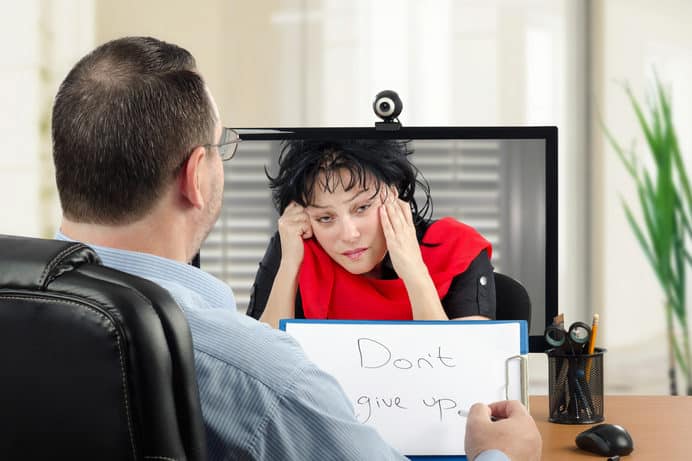
[et_pb_section admin_label=”section”] [et_pb_row admin_label=”row”] [et_pb_column type=”4_4″][et_pb_text admin_label=”Text”] Abstract Amid increases in electronic health record adoption, many psychotherapists are concerned that in-session computing may harm the client–provider relationship, also known as the therapeutic alliance. The emerging practice of collaborative documentation (CD) is one strategy designed to prevent this outcome. Little empirical work has examined the effects […]

Elizabeth Matthews, Ph.D.
June 4, 2020

Clinical Creativity and Idiographic Goals in Psychotherapy
Walking the hallway of the Psychotherapy and Behavior Change Lab throughout the course of my graduate training, I often glanced at a paper that my mentor had taped to one of the doors, which cited Paul’s (1967) iconic question: ‘‘What treatment, by whom, is most effective for this individual with that specific problem, and under […]

Matteo Bugatti, Ph.D.
April 21, 2020

An Independent Practice Does Not Need to Be an Isolated Practice
Recently we have heard a lot about the importance of therapist self-care. Jeffrey Barnett (2014) made a strong case that self-care is an ethical imperative based on the APA Ethics Code principles of beneficence and maleficence, as well as the guidelines related to competence, managing personal problems and conflicts, and avoiding harm. Self-care has […]

Barbara J. Thompson, Ph.D. + 1 more
April 21, 2020

An Integrative Review of Therapeutic Empathy
The Complex Nature of Therapeutic Empathy Therapeutic empathy has long been identified as a particularly robust predictor of outcome (e.g., Elliot et al., 2018; Lafferty et al., 1989; Luborsky et al., 1988), yet its complexity has made it difficult to operationalize. Historically, some theorists have emphasized the sensory-emotional components (Kohut, 1959; Titchener, 1915), while others […]
Shannon L. McIntyre, Ph.D. + 1 more
March 8, 2020