
Mission
Within the Division’s organizational structure, the Education and Training Domain is home to the
- Education and Training Committee (Chair: Stewart Cooper),
- Continuing Education Committee (Chair: Mariafé Panizo Jansana), and
- Student Development Committee (Chair: Maria Lauer).
Across these committees, the Education and Training domain works to enhance psychotherapy education by promoting dialogue about how to optimally implement and assess psychotherapy teaching and learning, identifying relevant priorities, and disseminating content on emerging ideas and trends.
To that end, the domain provides regular articles in Psychotherapy Bulletin as well as additional information and opportunity for enrichment via the APA Division 29 website.
Students should be sure to visit the Student Portal to get familiar with resources available and advise us of additional content you may need. Visit our Member Portal for more information about CEs.
For those already in the workforce, please be sure to regularly visit the SAP homepage for announcements regarding continuing education webinars and other events.

Domain Representatives
This section highlights the dedicated professionals who oversee and contribute to each specialized domain within the field of psychotherapy, ensuring continued growth, development, and innovation across various areas of practice.

Cheri L. Marmarosh, Ph.D.
Education and Training Domain Representative to the Board of Directors
Cheri L. Marmarosh, Ph. D. is excited to join the Division 29 Board as the Education/Training Directorate. She is familiar with the needs of graduate students, licensed psychologists, and psychologists in different areas that include private practice, military healthcare, medical care, outpatient treatment, inpatient treatment, and academia.
Dr. Marmarosh is currently the Director of the International Center for the Study of Spirituality at Divine Mercy University and the lead researcher for the McLean/Harvard Collaboration. She is currently studying the psychological, spiritual, social, and cultural factors that influence wellbeing in adults with incurable cancer and those seeking psychotherapy in community mental health clinics. Dr. Marmarosh is also an Associate Professor in the Professional Psychology Program at the George Washington University, where she has been for 18 years. She is a licensed psychologist who has been practicing in D.C. and teaching and supervising group therapy for over 25 years. She has published over 50 empirical and theoretical articles that focus on how group and individual psychotherapy facilitate change. Dr. Marmarosh is the lead author of two books, Attachment in Group Psychotherapy and Groups: Fostering a Culture of Change. She is the Editor of the book, Attachment in Group Psychotherapy, a monograph of manuscripts from the special edition the International Journal of Group Psychotherapy dedicated to attachment theory. She published a video applying attachment theory to group psychotherapy for the American Psychological Association’s (APA) psychotherapy series. She was an associate editor for Psychotherapy and Group Dynamics: Theory, Research, and Practice, and is on the editorial boards of those journals in addition to the International Journal of Group Psychotherapy and the Journal of Counseling Psychology. She is a Fellow of the American Group Psychotherapy Association (AGPA), Division 29 (Psychotherapy), and Division 49 (Group) of the APA. In 2020, Dr. Marmarosh received the Mentor and Teaching award from Division 29 for her years of teaching psychotherapy to graduate students. This year, she was the recipient of the Author Teicher Group Psychologist of the Year Award from Division 49.
Dr. Marmarosh’s research applies attachment theory to understand the development of the psychotherapy relationship, and she has focused on how client and therapist attachments influence process of individual and group psychotherapy.
Dr. Marmarosh is past president for Division 49 (Study of Groups Psychology), and she is excited to be the incoming Training/Education Directorate for Division 29. She looks forward to bringing her knowledge of psychotherapy, groups, and supervision to the Division. This is an important time in history where clinicians are prioritizing and addressing systemic racism, healthcare inequities, and oppression, all of which prevent many people from having access to mental health care.
Comprehensive Resource Toolkit for Psychotherapy Professionals
Tools
Competency Initiatives in Professional Psychology
Evidence-Based Therapy Relationships
Mobile Applications for use by clients as well as providers
A free web-based system to help clinicians evaluate and monitor the course of treatment
A library of scales appropriate of use in clinical and research applications
An Excel file file available for download provides a structure for incorporating clinical outcomes in supervision to teach trainees how to examine their overall aggregate outcomes. (Please see Swift, Callahan, Rousmaniere, Whipple, Dexter & Wrape (in press) for further description, or email Dr. Rousmaniere directly.
Expand Your Knowledge in
Psychotherapy Education & Training
Latest Insights
Latest in Education & Training

Introducing a 12-Step Approach to Change: Three Broad Strategies for Graduate Education and Training
Foundational Evidence for 12-Step Approaches to Change Across a range of disorders, self-help approaches to change are effective (Norcross et al., 2013). In many instances, their effectiveness approximates that of professionally delivered psychological services and commonly produces effects superior to no treatment at all (Barlow et al., 2000; Seligman, 1995). When the problem is substance […]

Philip R. Magaletta, PhD
December 5, 2024
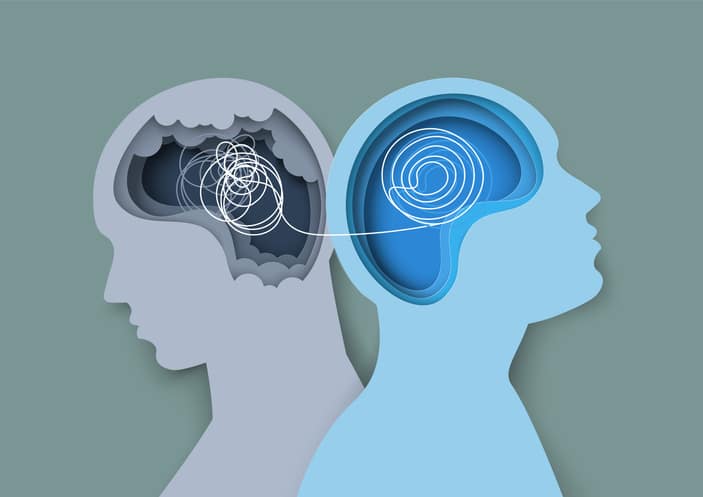
Neurobiological Synchrony and Group Psychotherapy: A Potential Path Forward for Group Process and Outcomes Research
A Potential Path Forward for Group Process and Outcomes Research Recent research on therapist-patient neurobiological synchrony in individual psychotherapy has suggested a potential connection between biological synchrony and therapeutic change mechanisms (Zilcha-Mano et al., 2021). This type of burgeoning research is an exciting step forward in psychotherapy process and outcomes research, given the extent to […]

Kelly Gleischman, MAT + 1 more
December 3, 2024

Psychotherapy Practice over the Lifespan
As members of the Professional Practice Committee of the Society for the Advancement of Psychotherapy, we are tasked with meeting the needs of private practitioners. In our monthly meetings, we noted how the needs and experiences of practitioners change as one matures into the role of a psychotherapist. Since our committee has a diverse combination […]

Genée D. Jackson, PhD + 3 more
November 22, 2023

Self-Care for Graduate Students
You don’t need us to tell you this, but graduate school is a very challenging, demanding, and stressful time. While it hopefully is one of the most exciting, stimulating, and invigorating times of your life, you also must contend with stressors associated with being a graduate student as well as those in your personal life, […]

Jeffrey E. Barnett, Psy.D., ABPP + 1 more
March 24, 2022

Rethinking How We Teach Socratic Questioning
Socratic questioning is a transtheoretical omnipresent psychotherapeutic process (Overholser, 2018; Waltman et al., 2020). The notion that corrective learning is essential to psychological healing and growth stems back to the origins of psychotherapy (Alexander & French, 1946); this phenomenon is commonly called the corrective emotional experience (Alexander & French, 1946; Yalom, 1995). From an integrative […]

Scott H. Waltman, Psy.D., ABPP
December 1, 2020

Critical Incidents in Pre-Practicum Supervision from the Perspective of Counseling Trainees
Pre-practicum (PP) supervision is counseling trainees’ first introduction to the tremendously complex and comprehensive process of supervision. Supervision is vital for counseling trainees’ professional development as it is one of their first steps towards the development of competence as psychotherapists and lays the groundwork for subsequent training (Hatcher & Lassiter, 2007; Hill et al., 2007). […]

Jacob Daheim, M.A. + 2 more
August 27, 2020
Join the Society
Be Part of the Conversation
Join a community of psychologists, researchers, and clinicians dedicated to advancing psychotherapy.