
Why Artificial Intelligence Will Not Replace Human Psychologists: Legal, Ethical, and Clinical Limitations

John Gavazzi, PsyD, ABPP
December 29, 2025
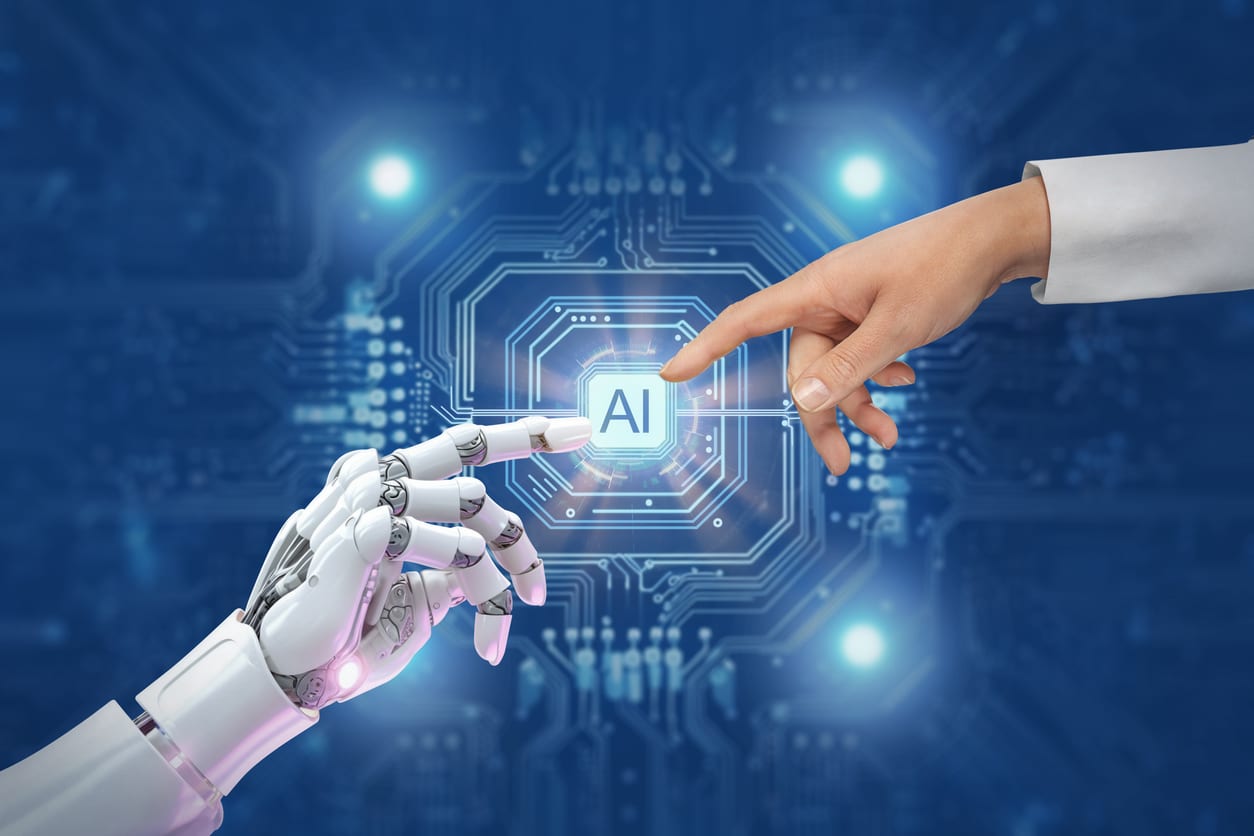
This article builds on previous arguments (Gavazzi, 2025a; Gavazzi, 2025b) stating that although AI technologies are rapidly advancing, they cannot replace human psychologists performing psychotherapy; this is simply the result of evolutionary advantages in humans across social, emotional, and cognitive domains that are essential for therapeutic interactions. In addition, these systems are unlikely to replace psychologists in the foreseeable future for practical reasons. Legal, ethical, and clinical barriers— particularly those involving state licensing, clinical judgments, forensic considerations, and accountability—make the deployment of autonomous systems in therapeutic settings impractical and potentially dangerous. This article presents key structural and philosophical reasons why human oversight and involvement remain essential in psychological practice.
State Licensing Considerations with Artificial Intelligence
An immediate obstacle to AI technologies replacing human psychologists is the regulatory framework that governs mental health practice. In the United States, psychology is regulated at the state level through practice acts, which consistently define a licensed psychologist as a human professional who has met rigorous educational, supervised training, and experiential requirements (American Psychological Association [APA], 2011).
Currently, no state licensing board recognizes non-human entities as eligible for licensure. Illinois enacted legislation prohibiting autonomous AI technologies from providing direct therapeutic interventions or making clinical decisions (Roy, 2025). Licensure requirements include academic training, supervised clinical experience, and examinations as well as continual use of professional judgment, adherence to ethical codes, and accountability for actions. These professional obligations are inseparable from human agency.
Professional oversight mechanisms presuppose human accountability as licensing boards investigate complaints, hold hearings, and impose sanctions. These processes require a human practitioner capable of understanding the consequences of their actions and then modify their professional behavior accordingly. Licensing an AI system as a practitioner would necessitate a complete restructuring of these systems, including new definitions of competence, malpractice, and remediation. There is currently no legal precedent or regulatory movement toward such change (Mello & Cohen, 2025).
The complexity of clinical decision-making presents an additional barrier. High-stakes contexts—including assessment of suicide or homicide risk, mandated reporting duties, and severe psychopathological presentations demand much more than data analysis. Psychologists integrate intuition, cultural sensitivity, and emotional attunement into their clinical conceptualizations, considerations, and treatment plans. AI systems, even those trained on extensive datasets, lack the lived experience and contextual awareness needed for adaptive clinical reasoning (Gavazzi, 2025b; Thakkar et al., 2024). Although AI agents may contribute as adjuncts to psychological services, current legal and regulatory structures preclude recognition of non-human independent practitioners.
Fidelity, Judgment, and Forensic Implications
AI technologies lack a genuine understanding of ethical principles, a deficit that is particularly consequential within a therapeutic relationship. A critical example is the principle of fidelity, which obligates clinicians to uphold commitments, foster trust, and prioritize the patients’ best interests. Upholding this principle requires a nuanced comprehension of the patient’s emotional state, developmental history, cultural sensitivities, and psychological resilience. These are competencies that AI systems currently cannot replicate (Thakkar et al., 2024). For instance, a decision on whether to pursue involuntary hospitalization for a patient expressing suicidal ideation depends on multiple factors. These include assessing the immediacy and lethality of their intent, their access to means, the strength of protective factors (i.e., family support, future orientation) and their history of impulsive behavior compared with chronic despair. A human clinician synthesizes this information through years of training and interpersonal experience. In doing so, the clinician navigates these considerations while safeguarding both the patient’s autonomy and safety—balancing the therapeutic alliance with the inherent duty to protect. An AI system, constrained by its probabilistic modeling, cannot genuinely grasp the weight of removing someone’s freedom or the complex relational consequences of such interventions (Montemayor et al., 2022).
These limitations have especially serious implications in forensic contexts. When psychological records are subpoenaed or clinicians are called to testify, it is unclear how an AI system would respond to such legal demands. If an AI system were to testify, it’s reasoning processes would be opaque as a result of the black box nature of machine learning, where the internal logic connecting data to decisions is invisible to humans. This opacity would make the AI system’s decision making difficult, if not impossible, to defend in court (Price, 2017).
Several critical questions follow: Could an AI system be compelled to testify under oath? Who bears responsibility for its decisions; the developer, the deploying institution, or the algorithm itself? If the AI system’s code were generated or modified by another AI (as occurs in generative systems) the chain of responsibility fragments and becomes untraceable. Price (2017) warns that algorithmic decision-making in healthcare may advance faster than the legal system’s ability to assign liability, creating an accountability vacuum. Beyond questions of liability, concerns about data integrity and chain of custody arise. AI-generated psychological records would require new protocols to ensure authenticity, prevent tampering, and verify the origin of documentation. Without standardized, auditable safeguards, the admissibility of AI-generated psychological documentation in court remains uncertain.
Accountability and Standard of Care Issues
A cornerstone of professional psychology is accountability. When allegations arise that a human psychologist has practiced below the standard of care, there are established mechanisms for investigation, peer review, and disciplinary action. By contrast, in cases involving AI systems, accountability becomes diffuse and legally ambiguous (Price et al., 2022). AI systems cannot be held personally liable, nor can they be suspended, fined, or required to undergo remedial training. Instead, liability would fall on the developers, healthcare institutions, or software vendors, none of whom are necessarily licensed mental health professionals. This disconnect between liability and professional oversight creates a critical gap in the enforcement of professional standards.
Determining what constitutes substandard care by an AI is also fraught with difficulty. Should AI systems be held to the same standard as a reasonably competent human psychologist, or should a new, algorithm-specific standard be developed? Establishing such a benchmark would require expert testimony from individuals with expertise in both clinical psychology and software engineering, which are not plentiful (Minssen et al., 2020).
Moreover, unlike human errors which are typically isolated, AI system errors become systemic. A flaw in an algorithm’s training data or decision logic could affect thousands of patients across multiple jurisdictions simultaneously. For example, if an AI system incorrectly assesses suicide risk due to biased training data that underrepresents certain demographics, the harm is not individualized but widespread and may remain undetectable without large-scale audits. The scalability of AI systems amplifies both their benefits and their risks. While a human clinicians’ malpractice typically affects a limited number of patients, a defective AI system could compromise the care of thousands or tens of thousands. For example, an AI system operating in an interjurisdictional manner that incorrectly assesses suicide risk due to flawed natural language processing could be catastrophic.
Such systemic failures would raise unprecedented questions: Should all patients treated by the AI systems be reevaluated? Who should bear the cost? How should harm be quantified across diverse populations? Insurance models are not equipped to handle such large-scale liability, and existing malpractice policies do not account for algorithmic error (Price et al., 2022). High-profile AI system failures could severely undermine public trust in mental health services and care, which is founded on trust, confidentiality, and empathy, elements that are difficult to replicate in AI systems and challenging to regulate as it is. A single, widely publicized incident of AI-related harm could delay the integration of AI technology in psychology for many years.
Conclusion
AI shows the potential as a supportive tool in psychological practice by assisting with screening, data analysis, and treatment planning, however, it cannot replace the human psychologist. Legal frameworks governing licensure, the ethical requirements of therapeutic fidelity, the forensic challenges of algorithmic transparency, and the systemic risks of accountability all point to the irreplaceable role of human judgment, empathy, and responsibility in mental health care. State licensing boards are unlikely to credential non-human practitioners; courts are unprepared to evaluate AI testimony; and liability systems cannot adequately address algorithmic harm. More fundamentally, the essence of psychotherapy—rooted in relationships, trust, and shared human experiences—cannot be replicated by AI technologies. As the field integrates AI technologies into psychological services, the focus should remain on augmentation and not replacement. The future of psychology lies in collaborative models where technology enhances rather than replaces the human connection that is central to healing.