What Deliberate Practice Supervision Has to Offer Traditional Supervision: Nine Take-Home Messages

Hanna Levenson, Ph.D.
May 27, 2024
For the past year and a half, I have been sitting in on Supervision of Supervision (Sup-of-Sup) meetings led by Alex Vaz and Tony Rousmaniere as part of their one-year Deliberate Practice Supervision Residency Program at Sentio Counseling Center. Initially, I planned to attend just one or two online meetings but after the first meeting, I was hooked. In what follows I’ll share nine take-home messages of what Deliberate Practice Supervision (DPS) has to offer traditional supervision (TS) in the hopes it might encourage some of you to integrate DPS into your supervision sessions.
To provide some context, I have recently become acquainted with and committed to using DP in training and have co-authored three DP books as part APA’s Series on Essentials of Deliberate Practice. For over 40 years I have been very involved in psychotherapy training and supervision—having taught over two thousand graduate students and supervised several hundred of them, researched and written on supervision, done workshops and training DVDs on the topic, and produced/hosted 11 videos and edited 11 books for the APA series Essentials in Supervision. In other words, I felt I knew the supervision terrain rather well. However, what I observed in these DP Sup-of-Sup meetings was not like anything I had seen in supervision before. It was challenging, refreshing, and impactful.
Sup-of-Sup Meeting Format
In the Sup-of-Sup meetings, Alex and Tony work with six supervisors who want to learn the Sentio Supervision Model (SSM). These supervisors give their time supervising two Sentio Counseling Center trainees for one year in exchange for in-depth group training in how to use DPS. In the 60-minute meeting, Alex usually consults with three supervisors on one of their supervision sessions for that week, having already reviewed their supervision videos. (Did I mention that all of the supervision sessions are video recorded?) Alex then chooses one video per supervisor, making it transparent why he has chosen that particular video, and the following consultation is based on what unfolds in that video.
Each video shows the supervisor working with a trainee following a prescribed series of seven steps. Detailed information on this step-by-step model can be found in the March 2024 issue of this Bulletin. During the supervision session, the supervisor not only talks with the trainee about the case, but also watches specific portions of the trainee’s video-recorded therapy to evaluate and assess various aspects of the trainee’s work with the client. This includes looking for difficulties the trainee may be having with the client, reviewing the client’s progress by consulting their routine outcome monitoring scores, constructing a personalized DP skill exercise designed to ameliorate the trainee’s difficulties (skill deficits), and modeling and practicing the skill with the trainee. Before I continue, I want to make sure you caught that in the Sup-of-Sup meeting a video of the supervision is used to look at how the supervisor worked with the video of the trainee’s therapy to devise DP skill exercises. In the past, I have written about how supervision has been the most closeted component of psychotherapy training—no one records or shows their supervision sessions. In these Sup-of-Sup meetings, however, the door is thrown wide open!
Take-Home Message #1: Use Video to Focus on Specifics
One unique aspect of DPS is the way it uses video to hone in on specific, observable examples of whatever is being discussed. Frequently in TS there are abstract discussions (albeit often fascinating ones) of what is going on with the client (e.g., “I think the client has attachment difficulties given his neglect when he was a child.”), what is going on with the supervisee (e.g., “I am getting triggered by this client.”), and what is going on in the therapeutic relationship (e.g., “Quite clearly you need to meet the client where he is and develop a stronger therapeutic alliance.”).
While there has been an increase in the use of video in TS, the procedure for using video in DPS is more focused on specifics. In DPS, the supervisor watches a video of the trainee’s therapy, and in collaboration with the trainee, identifies a specific place where the trainee does not respond to the client in a helpful manner. This is what DPS calls a “client challenge.”
Here is a DPS example: The supervisor stops the video when they see that the client was becoming overwhelmed and the trainee’s interventions were not regulating the client. The supervisor said, “Notice what the client’s eyes are doing. They are blinking. Her hands are trembling. She is overwhelmed. The challenge here is that your client is not well regulated. And what you are doing that is not working is giving her more information, overwhelming her further. Can you see that?”
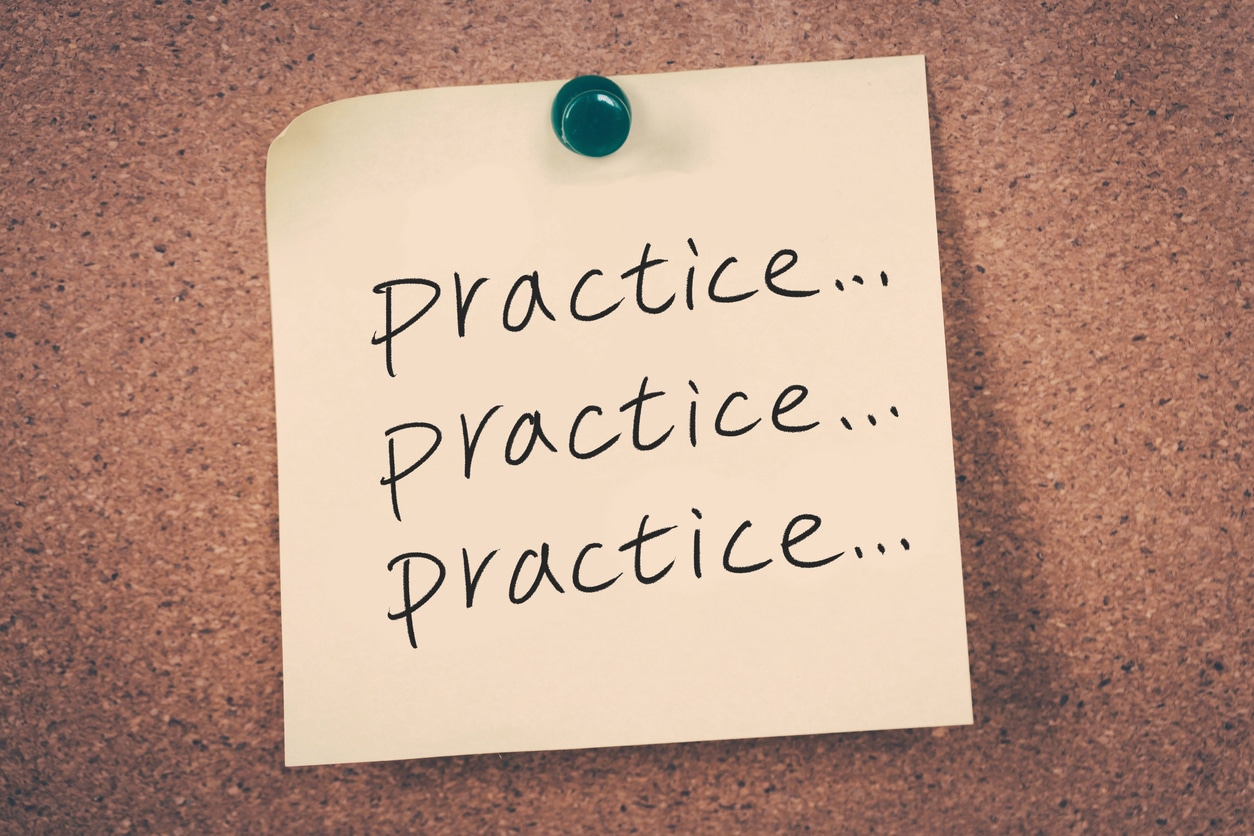
Take-Home Message #2: Practice, Practice, Practice
As a kid, I loved to play the piano but disliked practicing and I don’t think I’m alone in this. Practice is challenging. Repeatedly returning to something you find difficult is hard work. While it pays off in the performance, of course, the aspect of practice is demanding and not always enjoyable. In DPS, the supervisor has the trainee practice a new skill in the supervision session. At first the practice is kind of clunky, especially if the skill has several distinct criteria. I have observed supervisors breaking the skill into bite-sized chunks, or if the trainee were particularly anxious, asking them to write down a script following the skill criteria and read it over and over again until they could perform the skill without reading the script.
In the Sup-of-Sup review of the supervisors’ videos, Alex and Tony often explain that “gravity pulls us away from practicing.” Did I mention practice is often not enjoyable? After the trainee does one round of behavioral rehearsal and the supervisor gives corrective feedback, the supervisor uses a key supervisor intervention: “Let’s try that again,” to bring the trainee back into practice. Playfully, Alex might start off a supervisory consultation by congratulating a supervisor for practicing a skill with the trainee “on time.” (The Sentio Supervision Model timeline indicates that behavioral rehearsal should begin at the half-way point of a 50-minute supervision session.) More about the importance of a “playful vibe” below.
Take-Home Message #3: Give Homework
Practicing with the supervisor is critical; however, a key tenant of DP is that it is not enough. This leads us to a discussion about homework. The DP supervisor gives the trainee an assignment consisting of the exact same skill rehearsed in supervision to practice on their own for at least 10 minutes. For example, in DPS the trainee might have been practicing the skill of asking about missing details or vague parts of a client’s narrative (e.g., “Can you describe how you experience your depression?”). Then the trainee would be expected to practice the exercise on their own, since solitary practice has been shown to be a critical factor in achieving expertise (Ericsson & Pool, 2016).
The DP supervisor might suggest that the trainee watch the video of their therapy session and stop the video several times to try out the new skill (e.g., asking about missing details) while looking at the client. Using a video of the client during practice provides a great simulation of the actual therapy. Furthermore, if the trainee needs a reminder of what to do or how to do it, they have access to the supervision video and can review it.
Take-Home Message #4: Use Focused Role-Play
In TS it is not uncommon to have free-form role-plays where the trainee and the supervisor (or two trainees) improvise a back-and-forth dialogue, approximating a therapy session. These experiences can certainly give trainees a sense of what it might be like to do therapy and the challenges involved, but what they do not provide is the repetition and successive refinement that occurs in DPS. In a DP role-play, the “therapist” focuses on one skill and repeatedly improvises responses consistent with that skill to prewritten challenging “client” statements. The beauty of this method is that with sufficient practice, one can see the trainee finding their own voice in the behavioral rehearsal. On more than one occasion Alex has quoted the famous jazz musician, Miles Davis, “Sometimes you have to play a long time to be able to play like yourself.”
Take-Home Message #5: Be Clear and Crisp with Corrective Feedback
Practice without feedback is useless. Blindfold someone at the archery range and they will not increase their ability to hit the bullseye no matter how much they practice. Research has indicated that most supervisors doing TS are comfortable giving general positive feedback (e.g., “I can see you are really improving over time.”) but are very reluctant to give precise negative feedback (Hoffman et al., 2005). Ironically, receiving only positive feedback makes most trainees nervous. They wonder what isn’t being said and why.
Repeatedly in the Sup-of-Sup meeting, I saw Alex and Tony help guide the supervisors to give their trainees very explicit, actionable feedback (e.g., “You nailed it with the first part of your sentence. The second part should be eliminated entirely.” “Leave twice as much silence between your sentences.”) This type of constructive feedback not only helps shape the trainee’s behavior, but it also helps consolidate the learning.
Take-Home Message #6: Have a Playful Vibe
I love the “failure facing” attitude of DP. In the Sup-of-Sup meeting, Tony and Alex create an atmosphere where mistakes are seen as opportunities to learn through play and experimentation; and this spirit gets recreated in the supervisors’ supervision sessions. In DPS there is more laughter and lightheartedness than I have witnessed in TS. DP is difficult and demanding for both supervisors and trainees. Creating a lighter vibe relieves some of the heaviness that can easily occur in supervision. The fun and laughter in the session remind trainees that DP is a no-stakes environment, but the repeated focus on practice gives it a high-stakes feel. This allows for a playful yet intense vibe. Because the attitude that one learns from mistakes is baked into DP, I have found trainees’ anxiety and shame are lower than in TS.
Take-Home Message #7: Be Transparent
DP discourages supervisors from setting up residence on a pedestal of knowing. Watching the supervision videos, I heard more than one DP supervisor say to a trainee, “I’m talking too much. Let’s get back to practicing.” Supervisors are encouraged to do self-observation in the supervision and call themselves on “mistakes” they make. Many DP supervisors keep a printout of the Sentio Supervision Model’s (SSM) seven steps clearly visible on their computer desktop in full view of their trainees. The trainees know that their supervisors are learning how to supervise using DP. The less hierarchical frame does not inhibit the learning—quite the contrary, it sends the message that in this profession, we are all involved in life-long learning. In addition, DP supervisors report that following the SSM outline during supervision in a transparent manner “feels freeing and containing” at the same time.
Take-Home Message #8: Let The Practice Do the Teaching
Tony and Alex are fond of saying, “The supervisor isn’t doing the training; the skill rehearsal is doing the training.” At first I was perplexed by this, but I have now seen it enough times to be thoroughly convinced it’s true. For example, sometimes it is hard to discern what is the client challenge or what is the most relevant skill to rehearse. Having the trainee repeat the not fully understood behavioral rehearsal often answers these questions. In one Sup-of-Sup meeting, Alex advised, “If you don’t know why something isn’t working, keep practicing, and it will become clearer. Fumble around, buy time, try it again.” In my own work doing DPS, one trainee’s awareness of his countertransference started emerging as he repeatedly practiced an intervention (e.g., “I feel like I am being too intrusive.”). If we had talked about what was going on in a more TS manner, I doubt he would have reached such an experiential realization so quickly or meaningfully.
Practicing also reveals how easy or difficult the skill is for a trainee. Often times supervisors cannot judge ahead of time where supervisees will struggle; skill rehearsal can bring this to the surface. Rehearsal can also help with conceptual clarity, providing a deeper sense of how and even why a particular intervention works.
Take-Home Message #9: Use Restraint
Restraint is perhaps the most difficult thing for all supervisors to learn, but it is the DP supervisor’s sidekick. Psychotherapy training is customarily conceptual; inhibiting ourselves from saying more can feel like we are shortchanging our trainees. After all, we have so much wisdom to impart and we want to share the clarity we have learned from our experience. We believe that if we can include more, describe more, and explain more, then more learning will take place. In DPS the assumption is that focusing on experiential learning is often a more powerful teacher.
Conclusion: Incorporate Deliberate Practice Supervision Methods
I’ll end by urging TS supervisors to seriously consider incorporating some DPS methods into their training sessions. Since DP methods are atheoretical, they can be used regardless of a supervisor’s theoretical orientation. Supervisors can apply their clinical theories and case formulations to identify relevant client challenges and skills they want trainees to learn, and then use DP methods to encourage experiential learning in their supervision sessions. A good place to start might be reading one of the brief training manuals from APA’s Essentials of Deliberate Practice Series. Each manual is a self-contained guide of theoretically-based DP exercises using simulation-based learning techniques. And for a deep dive, consider joining Sentio’s Deliberate Practice Supervision Residency Program and participate in your own Sup-of-Sup group. (You can thank me later.).