
The Dark Triad and Professional Fighters


 +2
+2Olivier van Hauwermeiren, PsyD & 5 others
September 5, 2021
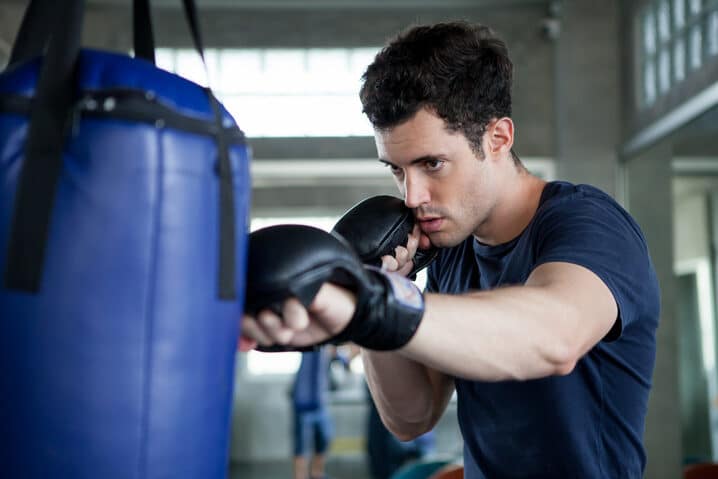
Combat Sport is an umbrella term for extreme striking or grappling sports. Wrestling, boxing, kickboxing, judo, and Muay Thai, amongst others, fall under the combat sport category. While some professional fighting disciplines, such as boxing, have been normalized within many cultures/countries, certain combat sports have been the target of recent scrutiny. Mixed Martial Arts (MMA) is a relatively new combat sport where practitioners compete in contests to identify competitors with best hand-to-hand combat techniques and the best overall combat sports skill set. These events are conducted predominantly in so-called ‘cages’, which are rings fenced in by metal net/mesh. The practices involve a wide range of striking techniques, including the use of knees and elbows, grappling techniques such as chokes, takedowns, and submission holds. Furthermore, the rules associated with the practice evolved over time, allowing athletes a broader range of techniques that were largely unknown to sports audiences. Without visual symbols of traditional safety measures such as boxing gloves, headgear, or pads, along with a greater amount of visible blood due to superficial cuts, organizations who engaged in early MMA events were condemned in a variety of ways (Helms & Patterson; 2014).
Senator John McCain described MMA as “Human Cock Fighting” in 1996. He pushed for legislation that led to MMA being banned from broadcasting within the US for several years. Despite an absence of medical evidence that the practice was more harmful than other combat sports, politicians, athletic commissioners, and physicians’ groups used the negative narrative as the basis for shaming MMA organizations in the media. Many put up legal barriers to the production of MMA contests, and pressured cable companies to take down events (Helms & Patterson; 2014). While Combat Sports such as MMA have become part of the sporting landscape more recently, much of the stigma still surrounds athletes that compete in combat sports.
Personality traits have been studied extensively in various sports. Among athletes, particular traits have been shown to predict various cognitive, affective, and behavioral outcomes (e.g., Laborde et al., 2017). The ‘Dark Triad’ refers to three distinct socially aversive personality traits of Narcissism, Machiavellianism, and Psychopathy as it relates to sports performance. Prior research of the Dark Triad indicated several group differences: 1) gender; men scoring higher than women, 2) expertise; athletes with greater expertise scoring higher than those with less expertise, and 3) type of sport; individual athletes scoring higher than team athletes across all factors on all three traits (Vaughan et al., 2019). However, to date, no research on the relationship between the Dark Triad and sport performance has included professional fighters.
Defining Dark Triad
Kowalski (2001) described three socially aversive personalities that have attracted the most attention: Machiavellianism, Narcissism, and Psychopathy. Machiavellianism refers to manipulative personality types (Christie & Geis, 1970). It describes someone willing to manipulate, deceive, and exploit others to achieve their goals. People with Machiavellian traits are premeditative, tend to build alliances, and do their best to maintain a positive reputation (Jones & Paulhus, 2011). They are strategic rather than impulsive (Jones & Paulhus, 2011). People with such traits may avoid manipulating family members for instance (Barber, 1998) or any other behavioral tactics that might harm their reputation (i.e., feigning weakness; Shepperd & Socherman, 1997). Machiavellians appear to be manipulative, endorse callous affect, and a strategic-calculating orientation. Individuals with higher Machiavellianism scores are more likely to behave in a cold and manipulative fashion both in a laboratory setting and real-world studies (Christie & Geis, 1970).
Within this text, Narcissism will be referred to as the subclinical version of the Diagnostic and Statistical Manual of Mental Disorders, version three (DSM-III; American Psychological Association, 1980), suggesting these individuals have traits of Narcissistic Personality Disorder but do not meet full criteria. Characteristics of subclinical Narcissism include grandiosity, entitlement, dominance, and superiority. Narcissistic behavior is also marked by manipulation and callousness (Kernberg,1975; Kohut, 1978), much like Machiavellianism and Psychopathy. Rather than deliberate seen in Machiavellians, the cognitive processes of Narcissists are more self-deceptive. They seem to believe their boasts even when it can be verified that they exaggerate their competence, suggesting a lack of insight (Paulhus & Williams, 2002), which at times, can be advantageous for athletes after rebounding from defeats. Narcissistic grandiosity also promotes a sense of entitlement (Bushman, Bonacci, van Dijk, & Baumeister, 2003), even if that grandiosity is threatened (Bushman & Baumeister, 1998; Jones & Paulhus, 2010).
Much like Narcissism, Psychopathy is adapted to a subclinical sphere (Lilienfeld & Andrews, 1996). Characteristics of Psychopathy include high impulsivity and thrill-seeking along with low empathy and anxiety. Psychopathy, also known as Antisocial Personality Disorder, describes a set of personality traits and behaviors frequently associated with lack of emotional sensitivity and empathy, impulsiveness, superficial charm, and insensitivity to punishing consequences (O’Donnell & Hetrick, 2016). Psychopathy is characterized by the two key elements of Psychopathy: 1) deficits in affect (i.e., callousness) and 2) self-control (i.e., impulsivity; Cleckley, 1976; Hare, 1970; Lykken, 1995). The self-control deficit has remained central to criminal (Hare & Neumann, 2008; Hicks et al., 2007) and noncriminal conceptions of Psychopathy (Hall & Benning, 2006; Lebreton, Binning, & Adorno, 2006). Consequently, psychopaths manifest their callousness in a short-term fashion (Jones & Paulhus, 2011; Visser, Bay, Cook, & Myburgh, 2012). For example, they can lie for immediate rewards, even if those lies compromise their long-term interests (Paulhus & Jones, 2010). Thus, callous manipulation combines with other short-term traits (i.e., recklessness and thrill-seeking) to engender bold and relentless criminal behavior (Hare & Neumann, 2008).
Personality Traits and Sports
The relationship between personality traits and sport performance has been studied since the early ’60s and ’70s, and consequently became one of the most explored fields in Sport Psychology (Vealey, 2002). The published literature in the ’60s showed that personality factors (e.g., extraversion and emotional stability) moderate and are positively associated with sports participation and success. In contrast, the literature published over the ’70s conclude that the study of personality is relatively meaningless in sports due in part to the variety of contradictory obtained results (Raglin, 2001). Many research studies have investigated the difference in personality traits between athletes and non-athletes and found a significant difference between the two groups. Geron et al. (1986) investigated the personality traits of 273 athletes versus 379 non-athletes using the Minnesota Multiphasic Personality Inventory (MMPI). The athletes and non-athletes were matched according to sex, age, ethnic origin, level of education, and social-economic status. The sports included in this study were gymnastics, swimming, track and field, tennis, basketball, volleyball, team handball, water polo, and soccer. The researchers utilized 29 of the MMPI scales during their analysis. The researchers found a difference in personality traits among the athletes across different sports, such as athletes participating in team sports have higher levels of extraversion in comparison to athletes participating in individual sports.
Steiner, Denny, and Stemmle (2010) researched the interaction of self-regulation and emotional activation amongst elite collegiate athletes compared to gender-matched non-athletes at Stanford University. Relevant to the current research, their findings confirmed significant differences between athletes and non-athletes with athletes reporting higher levels of self-restraint, repressive defensiveness, and denial of distress, but lower levels of distress compared to non-athletes suggesting that they were more adept to deal with increased pressure. A study by Malinauskas and colleagues (2014), investigated the relationship between personality Big Five major personality traits (Openness, Conscientiousness, Extraversion, Agreeableness, Narcissism) and athletic capability. The study compared a sample of young adults, 169 athletes, and 207 non-athletes. The results indicated that athletes scored higher than non-athletes for conscientiousness, but scores were not statistically different between groups on other personality traits. Athletes likely scored higher in conscientiousness because they have to fit their training regiments and competition schedule around their academic schedule. The extra burden of their athletic career on their schedule forces athletes to be more organized with their time in order to maintain their lifestyle. Overall, the current body of research highlights significant differences between athletes and non-athletes in some personality traits.
Personality Traits Across Sports
In addition to seeing the difference between athletes and non-athletes, research has been done to investigate the difference in personality traits of athletes in different sports. A study by Próchniak (2011) compared personality factors between Polish skydivers and low-risk sports athletes. It was found that skydivers scored higher on impulsive sensation-seeking, hedonism, stimulation, self-direction values, concentration on the present, preferring a fast death, and belief about controlling death compared to the control group. Skydivers also scored lower on tradition, universalism, and benevolence values than the control group.
Nia and Besharat (2010) investigated the difference in personality characteristics between individual and team sports athletes. The findings revealed that individual sport athletes scored significantly higher on conscientiousness and autonomy than team sports athletes. Although, team sport athletes scored significantly higher on agreeableness and sociotropy than did the individual sport athletes. No significant difference was found between the two groups on neuroticism, extraversion, and openness. Overall, Nia and Besharat (2010) found significant differences between individual and team sports athletes. A study by Weissensteiner, Abernethy, Farrow, & Gross (2012) looked to investigate the psychological characteristics and skills fundamental to batting success in the sport of cricket. The study used a psychological battery that included mental toughness, perfectionism, coping ability, and optimism from 21 different batsmen divided into two different skill levels (highly skilled and lesser skilled). The results indicated that highly skilled batters were only distinguishable from batsmen of lesser skill by a higher degree of global mental toughness. The skilled batsmen scored significantly higher on mental toughness, dimensions relating to motivation, coping skills, and self-belief. The results show that mental toughness can be used to predict future talent. Overall, the body of research indicated significant differences in personality traits between athletes from different sports and even between athletes with skill differences within the same sport.
Personality Traits in Combat Sports
While limited as compared to other sports, psychological research has been done to examine personality traits amongst combat athletes. Li et al., (2020) examined the relationship between psychological profiles and performance success amongst professional taekwondo athletes in China. Researchers determined two psychological profiles based upon personality and emotional traits identifying them as Profile 1 and Profile 2. Both Profile 1 and Profile 2 produced two subtypes of athletes with those showing elevated levels at the positive end of the profile and those with elevated levels at the negative end of the profile. However, elevations were considered less pronounced regarding emotional and personality traits with Profile 2.
Findings suggest that with Profile 1, positive personality and emotional traits were linked to more performance success. Specifically, those athletes with less performance success were more likely to be depressed, lonely, envious, and displayed more aggressive behaviors. Athletes considered to be part of Profile 2 with high self-efficacy, extraversion, verbal aggression, and physical aggression had a significant association with less performance success while those with modest elevations of conscientiousness, depression, loneliness, impulse control, and neuroticism were associated with more performance success. Researchers hypothesized that modest levels of impulse control and conscientiousness may allow for calculated yet spontaneous responses for athletes that are essential for competition.
Binboga (2012) examined the relationship between Big Five personality traits, psychophysiological arousal, and cognitive anxiety with 30 taekwondo athletes who were competing in national selection competitions. Participants completed Five Factor Personality Inventory (FFPI) and Spielberger State-Trait Anxiety Inventory (STAI) while physiological arousal was measured through Electrodermal Activity Recordings (EDA). Results of the study showed a significant negative correlation between personality traits of agreeableness and EDA scores. EDA scores one day before competition were also significantly positively correlated with neuroticism. Regarding EDA scores on the day of the competition, results showed significant positive correlations between both agreeableness and conscientiousness. However, there were no significant findings between cognitive anxiety states and EDA scores 10 minutes prior to competition. Cognitive anxiety is associated with negative expectations, worries, and concerns about oneself, the situation at hand, and potential consequences. It is possible competitors prior to competition would underreport their cognitive anxiety. It’s likely that athletes feel the most anxiety right before competition, consequently creating a disconnect. Researchers concluded that understanding personality traits and stressors and how they are related to physiological arousal to competition may be beneficial to athletes and their performative success.
Leźnicka et al. (2017) evaluated whether combat athletes’ temperament was a modulating factor for pain sensitivity. Pain sensitivity was compared between combat athletes and students who do not participate in professional sports. Body measurements were taken for all the participants. Pain sensitivity was measured using the cold pressor test (CPT) and the pressure pain threshold (PPT) and researchers used the Formal Characteristics of Behaviour-Temperament Inventory (FCB-TI) to assess the participant’s temperament. For combat sport athletes, findings showed increased pain tolerance for both the CPT and PPT compared to the comparison group. For the combat athletes, associations were also noted between Body Mass Index (BMI) and endurance, BMI and activity, and BMI and pain threshold. Regarding temperament, combat athletes were also shown to have lower sensory sensitivity and greater endurance of the central nervous system suggesting greater pain tolerance. Combat athletes also showed lower perseveration indicating “greater flexibility of behaviors and easiness in shifting attention to various forms of stimulation” (Leźnicka et al., 2017). Perseveration has been shown to be important for athletes as they can develop coping strategies and free their attention from a problem. Combat athletes demonstrated lower levels of emotional reactivity indicating higher resilience emotionally. However, when controlling for BMI, combat athletes only showed significant differences compared to the comparison group with perseveration, sensory sensitivity, and emotional reactivity. Researchers concluded that temperamental characteristics of combat athletes may be linked to a higher resilience of the nervous system compared to those who do not participate in sports.
Being that combat sport athletes are subjected to increased physical pain, combat athletes have also been thought to have increased “mental toughness” in dealing with the pressure that comes with training and competition. Chen and Cheesman (2013) examined how mental toughness varied amongst 136 amateur, semi-professional, and professional mixed martial artists in the United Kingdom. Participants completed the Psychological Performance Inventory-A (PPI-A) and the Sport Mental Toughness Questionnaire (SMTQ). Results showed that participants in the professional competitions had higher levels of mental toughness compared to those in semi-professional and amateur competitions. Specifically, those in the professional competitions had as much as 10% increases in confidence, positive cognition, and determination compared to those in lower levels of competition. Researchers have often proposed that understanding how various personality traits and beliefs are related to performative success will be beneficial in creating interventions tailored to the athletes to maximize potential. A study by Zhang et al. (2019), Investigated the relationship between the Big Five personality traits and self-control in boxers and investigated self-efficacy as a mediator between the two variables. 210 Chinese boxers participated in the study. Relevant to the present study, the results indicated a significant correlation between the Big Five self-control and self-efficacy. Self-advocacy mediated the relationship between the Big Five personality traits and self-control.
Bernacka et al. (2016) investigated whether the personality dimension of conformism/nonconformist was a predictor of stress coping styles in athletes training in combat sports. The secondary objective was to present the characteristics of this personality dimension in the competitors’ adaptive/innovative sports performance. Conformism/nonconformist was defined as a type of social influence involving a change in belief or behavior to fit in with a group. This change was in response to real (involving the physical presence of others) or imagined (involving the pressure of social norms/expectations) group pressure. The study used 346 males practicing combat sports such as kickboxing, MMA, Thai boxing, boxing, and wrestling. The participants completed the Creative Behavior Questionnaire, which measured the conformity/nonconformity personality dimension, and the Coping Inventory for Stressful Situations, which measured stress coping styles. Comparative analyses were conducted only for the groups of conformists and nonconformists. Differences in stress coping styles between conformists and nonconformists training combat sports were found as nonconformists tended to prefer the task-oriented coping style. Conclusively, a higher rate of nonconformity was associated with increasingly frequent task-oriented coping and decreasingly frequent emotion-oriented coping style (Bernacka et al, 2016).
The Dark Triad in General Population
Similar research has been done to measure the difference in the Dark Triad traits amongst the general population and the behaviors related to the Dark Triad. A study by Sabouri, Gerber, Bahmani, Lemola, Clough & Kalak (2016) investigated the difference in the Dark Triad, mental toughness, and physical activity between men and women. A total of 341 adults, split evenly between men and women, took part in the study. Relevant to the present study, when compared to men, women participants had lower scores for Dark Triad traits (overall score and Psychopathy). At the same time, no differences were found for mental toughness or physical activity between men and women (Sabouri et al., 2016). Muris and colleagues (2013) examined the Dark Triad personality traits and their correlation in non-clinical youth ages 12 to 18. The researchers gathered data from both the child and parent reports. The results indicated Machiavellianism and Psychopathy emerged as significant and unique correlates of symptoms of aggression and delinquency, which underlines the importance of the Dark Triad traits in the pathogenesis of disruptive behavior problems in youth. Cheung & Egan (2020) investigated whether personality was a predictor of scholastic cheating. The researchers utilized an online sample of 252 students administered a personality inventory along with the dark triad questionnaire. Results indicated that psychopathy emerged as the strongest significant predictor of scholastic cheating. The results supported the view that dark personality is relevant for understanding scholastic cheating. The current body of research of the Dark Triad traits in the general population demonstrates significant differences between men and women. Additionally, researchers connected the Dark Triad with aggression, delinquency, and scholastic cheating amongst children. Clinically, it can be beneficial to measure a child’s Dark Triad scores to adjust the curriculum to children who are more likely to cheat. Future research can focus on developing curriculums for children that are more prone to cheating. Perhaps a curriculum that deemphasizes examinations or assignments.
The Dark Triad and Sports
González- Hernandez et al. (2020), researched the productive relationship between the Dark Triad and competitiveness. Additionally, they sought to identify any differences in dark triad scores between professional and amateur athletes. Their study sampled 806 Spanish athletes that represented 11 different sports. Competitiveness is strongly related to the traits of the dark personality triad. The results suggested that dark personality traits are related not only to individuality of the athletes, but also to the self-perception of both their psychological response and competitiveness of their sporting environment. Narcissists desire to be seen as outperforming expectations, and this perception of superiority is thought to be a key component in maintaining otherwise fragile self-esteem (Raskin & Terry, 1988).
Conclusion
It would be beneficial to investigate Dark Triad levels in MMA fighters further. The sport provides unique individualistic and competitive parameters that could attract or motivate an athlete with higher Dark Triad scores. Clinically, it would be beneficial to understand the Dark Triad of an athlete to improve their training regimen in preparation for the competition as certain training regiments motivate higher Dark Triads. As the research demonstrates, more opportunities for individual glory and competition within training can motivate athletes with higher Dark Triads to train harder. Beyond training, understanding a client’s Dark Triad levels can provide insight into how the client is interpersonally and potentially reveal harmful patterns that can be addressed in therapy.