
Tag
therapist effectiveness
Articles tagged "therapist effectiveness".
9 articles

Bronfenbrenner and Psychotherapy: A Tale by an Emerging Clinician
I was inspired to write this piece by my postdoctoral mentor, Joanna Drinane, who asked about the integration of my two programs of study. To make a long story short, I achieved my PhD in Human Development and Family Studies some years ago and joined the Master’s in Clinical Mental Health Program at the University […]

Rochelle C. Cassells, PhD
November 22, 2023

A Bouquet of Experimental Designs in Psychotherapy Research
A Horse Race … Psychological treatments that are intended to be fully therapeutic and that are provided by trained professionals (bona fide psychotherapy; Wampold & Imel, 2015; Wampold et al., 2011) have been found to be effective compared to no-treatment and treatment-as-usual for individuals who suffer from a number of disorders, including anxiety and depression […]

Christine Wolfer, M.Sc. + 1 more
December 31, 2016

What Do Psychotherapists Want?
As Sigmund Freud asked, “The great question that has never been answered, and which I have not yet been able to answer, despite my thirty years of research into the feminine soul, is ‘What does a woman want?’” (Jones, 1955, p. 421). Psychotherapy researchers may wonder the same thing about psychotherapists. More than 50 years […]

Barbara L. Vivino, Ph.D. + 3 more
December 30, 2016

Clinicians Self-Judgment of Effectiveness
Background Research has demonstrated significant between-therapist variability in both process (e.g., working alliance) and outcome (e.g., symptom reduction), pointing to the so-called therapist effect (Baldwin & Imel, 2013). Although still in its infancy with regard to empirical scrutiny, thinking in this area has largely assumed that more effective therapists possess specific characteristics that foster consistently […]
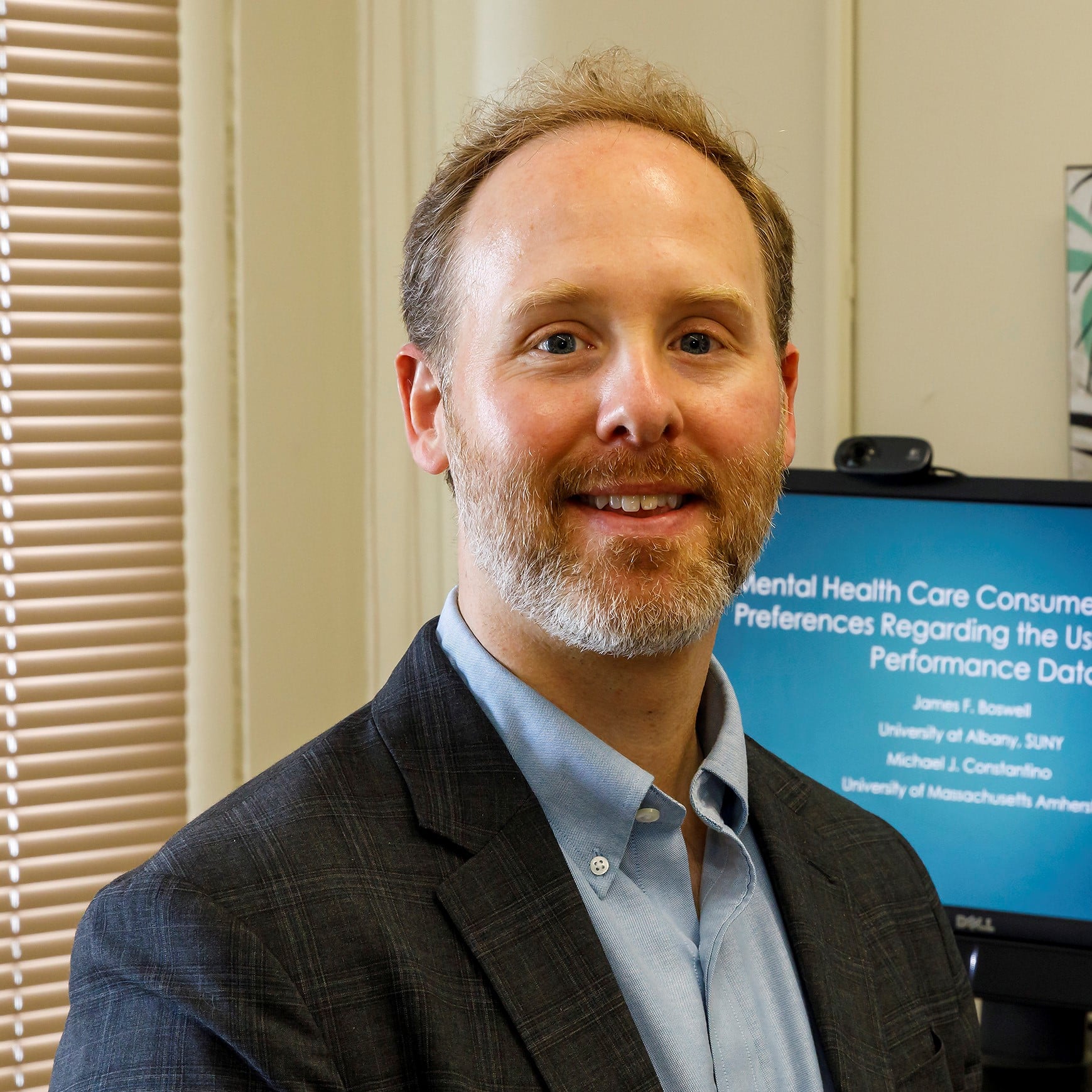
James F. Boswell, Ph.D. + 1 more
October 30, 2016

Deliberate Practice for Early Career Psychotherapists
Domain Note: The Role of Deliberate Practice across the Professional Lifespan The Society for the Advancement of Psychotherapy Education and Training Committee is excited to be providing a series of articles on the role of deliberate practice (DP) in the development of highly effective psychotherapists. The initial article (Love, Davis, & Callahan, 2016) focused on […]

Tony Rousmaniere, Psy.D.
October 28, 2016

What About the Words?
By ‘augmenting human intellect’ we mean increasing the capability…to approach a complex problem situation…a way of life in an integrated domain where hunches, cut-and-dry, intangibles, and the human ‘feel for a situation’ usefully co-exist with powerful concepts, streamlined terminology and notation, sophisticated methods, and high-powered electronic aids. (Engelbart, 1962/2001, p.1) Psychotherapy is certainly a complex […]

Brian T. Pace, M.S. + 7 more
October 25, 2016

10 Ways to Improve Psychotherapy Outcome
In Laska, Gurman, & Wampold (2014) and Laska & Wampold (2014) I discussed how to improve the quality of mental health care from a common factor (CF) perspective. Unfortunately, one fundamental misunderstanding of CF theory is that “anything goes” and therapists can do whatever they want. Let me be crystal clear, from a CF perspective, […]

Kevin M. Laska, Ph.D.
January 4, 2015

The Society for the Advancement of Psychotherapy Task Force on Psychologist Psychotherapists
Report Division 29 (The Society for the Advancement of Psychotherapy) President, Jeffrey J. Magnavita, initiated a task force to complete the following tasks and answer the following questions in 2010, reporting back to the Division 29 Board of Directors at its October, 2010 meeting. Jeffrey Barnett, past president of the division agreed to lead the […]

Jeffrey E. Barnett, Psy.D., ABPP + 6 more
March 29, 2010

Three Ways to Improve our Psychotherapy Effectiveness
Garrison Keillor observes of the residents of Lake Wobegon, “All the women are strong, all the men are good-looking, and all the children are above average.” As psychotherapists, it is likely that we similarly believe we are above average, but as Keillor’s folksy humor reminds us, it ain’t so—half of us are below average, as […]

Bruce E. Wampold, Ph.D., ABPP
October 30, 2006