
SEISMIC CHANGES IN THE SCIENCE, PRACTICE, AND EDUCATION OF PSYCHOTHERAPY

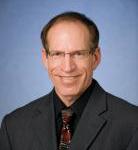
Pat DeLeon, Ph.D. & Stewart E. Cooper, Ph.D., ABPP
August 16, 2025

A note from Stewart Cooper, PhD:
As with most of society, the advancement of the practice, science, education, supervision, and administration of psychotherapy is facing a time of unparalleled change. It is certain that few psychologists have done more to advocate for the improvement of these very facets than Dr. Pat DeLeon. I invite you to be inspired by his Bio attached to this article.
Given his decades long advocacy for the field, I invited Dr. DeLeon to share his perspectives and recommendations via a presentation at the 2025 APA Convention in Denver. His comments are a synthesis of his presentation. I encourage all to join in the priority of developing Transformational Change Leaders.
Stewart Cooper, PhD, President, Division 29
Having served as President of APA in 2000 and on Capitol Hill for nearly four decades, I have come to appreciate the policy consequences of developing a long-term perspective. It is as if one is standing on a cliff and viewing the coming of an awesome Tsunami. Far below, families are enjoying the beach, frolicking in the waves, and completely unaware of what is about to strike. You can yell; but they cannot hear. All you can do is watch. In many ways, this scenario may reflect that which awaits the membership of the Society for the Advancement of Psychotherapy (Division 29), of which I am also a former President.
Today our nation is undergoing unprecedented change on many fronts. The critical question: Whether our colleagues are able to expand their vision (and actions) beyond their historical and comfortable silos of providing quality patient-centered care, in order to appreciate the broader context in which their professional lives currently exist. Without question, our society is undergoing major structural change. An increasing proportion of the population is obtaining advanced educational experiences and with that a very different expectation for how they will be treated by health care providers. As our population continues to mature and age, they will demand that the supportive and holistic services required will be available and ultimately paid for.

My mother was the second attorney in the State of Connecticut. She failed the bar examination the first time – the letter informing her when her oral exam was scheduled arrived 40 years later. “Hard to pass if you only take half the test! If I were a male, they would simply have asked me ‘where were you?’” She passed the second time. Today, many of the helping professions, including psychology and law, are predominately female.
Interprofessional education and collaboration are becoming increasingly common. Society as a whole is definitely more comfortable discussing mental/ behavioral health issues including anxiety, depression, burn-out, PTSD, and one’s emotional responses to physical issues such as heart attacks. And yet, it was not that long ago when Senator Inouye amended the relevant federal statures to authorize reimbursement for nurse practitioners. During Committee “mark-up” one year he proffered two amendments to cover the services of nurse midwives and psychiatric nurse practitioners. The first was enthusiastically adopted with several senior Senators commenting that they personally had been delivered by a nurse midwife. However, considerable hesitancy was expressed regarding covering psychiatric nurses; so that amendment was deferred for a year.

As a nation, we are increasingly impacted by the unprecedented advances occurring within the communications and technology fields – telehealth, interactive Apps, prosthetics, and most recently Artificial Intelligence (AI). I recall several decades ago suggesting to the leadership of the Rehabilitation Hospital of the Pacific that the future of rehabilitation was engineering not medicine. Even those on the board with engineering degrees could not appreciate what seemed obvious to me. Similarly, when I addressed an annual meeting of the Deans of Pharmacy and talked about pharmacy being a Primary Care health profession, very few understood. Today, both of these visions have come to pass. In a university policy seminar that I have been conducting over the past decade, visionary speakers repeatedly note that previously successful enterprises that do not adjust to change soon disappear – such as those stocked with rental VHS and DVD movies.
APA CEO Arthur Evans has consistently urged our colleagues to develop a population-based orientation to addressing the nation’s mental health needs (perhaps “crisis”). His focus on “wellness” and addressing the structural aspects of quality care including Diversity, Equity, and Inclusion (DEI) is most timely. Our next generation possesses increasing opportunities to make a difference. Exciting post-doctoral opportunities, providing proactive leadership throughout rural America and even internationally, developing psychopharmacological (RxP) expertise, and building upon former APA President Tony Puente’s vision for redesigning reimbursement systems all provide unlimited opportunities for those with vision to radically challenge the status quo. Whereas it was common to expect advances from leading-edge NIH research to take 17+ years to impact practice, today evidence-based decision making radically shapes the definition of quality care. And, with an increasing number of our colleagues pursuing additional training in related professions such as law, nursing, pharmacy, and public health, the potential for systemic realignment of the nation’s health care priorities increasingly emerges as these different perspectives and cultures focus upon what patients really desire.
From my personal perspective, I have been especially pleased with the extent to which our younger generation has become interested in being personally involved in the public policy/ political process as either elected officials or their senior staff. Listening to the stories of those selected for the Robert Wood Johnson Health Policy Fellowships (Danny Wedding being the first psychologist selected, with former University of New Mexico President Bob Frank soon thereafter) and APA’s Congressional Science Fellows gives us good reason to believe that seismic change is coming, especially within the all-important reimbursement arena.
And yet, Why is it that so many of our colleagues are clearly hesitant to apply for the societal recognition provided by APA Fellowship or ABPP certification? Why are there still state psychological associations that have not enthusiastically adopted the APA endorsed ASPPB PSYPACT Compact which provides licensure mobility and improves access to quality psychological care throughout rural America? Are we collectively unwilling to focus upon the real needs of underserved patients? Do our current training models foster respect for the profession and encourage broader conceptualization?
As APA’s Robin McLeod keeps reminding us, radical changes are occurring within our nation’s health care environment. While each of the health care professions are evolving toward doctoral level status, there are still close to one million behavioral health masters (or even less) trained providers seeking recognition. Will psychology step up and affirmatively provide visionary leadership to shape our future health care system? Will APA become actively involved in accrediting masters level training programs to ensure high quality expertise? Will we bring our clinical and organizational leadership to focus upon developing and utilizing the ever-impressive expanding technology applications (Apps and AI) within the delivery of care?

Or, will we continue to encourage colleagues to use their expertise to raise abstract and theoretical objections, such as those who oppose the use of telehealth for clinical supervision and who oppose supervising trainees in the delivery of care through interjurisdictional practice? What is it in our training that holds us back from embracing leadership positions and working to significantly modify the critical reimbursement protocols for psychological and behavioral health care? Should we not encourage our next generation to become Transformational Change Leaders, as Robin has suggested? Psychology is one of our nation’s educated elite. As such, we have a unique societal responsibility. From the vantagepoint of that overarching cliff, a monstrous Tsunami is rapidly approaching. How can Division 29 encourage its highly educated, dedicated, and compassionate members to become effective Agents of Change? Aloha and Mahalo,
Pat DeLeon, former APA President
