
SAP Who’s Who: Ronald F. Levant, Ed.D., A.B.P.P., M.B.A., L.H.D. (Hon.)

Society for the Advancement of Psychotherapy
February 6, 2025

Who’s Who- Ronald F. Levant, Ed.D., A.B.P.P., M.B.A., L.H.D. (Hon.)
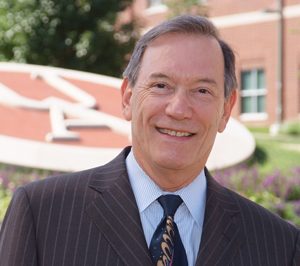
Can you tell me about your educational background and professional experience?
Ronald F. Levant (BA, History, University of California, Berkeley; BA, Psychology, University of California, Berkeley, Honors with Great Distinction; EdD, Clinical Psychology and Public Practice, Harvard University; MBA, General Management, Boston University, High Honors) is Professor of Psychology, The University of Akron, where he had previously served as Dean of the Buchtel College of Arts and Sciences. Prior to that, he served as Dean and Professor, Center for Psychological Studies, Nova Southeastern University, as a member of the psychology faculty at Boston, Rutgers, and Harvard Universities, and as a clinical psychologist in solo independent practice and a clinical supervisor in hospital settings.
What inspired you to become a psychologist?
As I wrote in my memoir, I suffered a major depression in my 20’s, for which I received all manner of inept care. After I recovered (following an LSD experience), I was motivated to learn as much as I could in order to provide better psychological care than I had received.
What are some common misconceptions about the psychotherapy field that you encounter?
In my small corner of the field, the psychology of men and masculinity, some men have the misconception that seeking psychotherapy for their personal problems will emasculate them, make them less self-reliant.
What has been the most rewarding part of your work?
Developing a focus on emotionally inexpressive men, including formulating a theory of why some men are emotionally inexpressive, developing scales to measure what I had by then termed “normative male alexithymia,” conducting research to evaluate these ideas, and developing a manualized treatment for alexithymia.
What has been the most unexpected part of your work?
Given my focus on the psychology of men and masculinity, the most unexpected part has been witnessing masculinity become a topic of the national conversation- indeed it was said to have been on the ballot for the 2024 Presidential election.
What is your hope for the field of psychotherapy?
In general, the need for psychotherapy far exceeds the available supply, so I hope that psychologists can streamline the doctoral curriculum as medicine has done for the MD degree, to shorten the duration from the current 7 years to something more manageable.
What are your future plans?
As a retiree, I can choose to do what I want to do, and what I want to do is continue writing and speaking on the psychology of men and masculinity. I released two books this past summer:
Assessing and Treating Emotionally Inexpressive Men – Routledge
The Problem with Men: Insights on Overcoming a Traumatic Childhood from a World-Renowned Psychologist – Koehler
My Memoir reached# 1 Amazon Best Seller in New Releases in Gender Studies, and it is now on sale for 99 cents (Kindle version) at Amazon.
I am working on another book under contact with Oxford University Press and am shopping yet another one to APA Books.
In addition to books, I published OpEds or Guest Opinion pieces in such outlets as Newsweek, Salon, Huffington Post, Akron Beacon Journal, and the Cleveland Plain Dealer. Finally, I have given webinars to such groups as Div 42, NYSPPA, The National Register, and ABPP.