
SAP Who’s Who: Dr. Beverly Greene, PhD, ABPP

Society for the Advancement of Psychotherapy
November 8, 2025

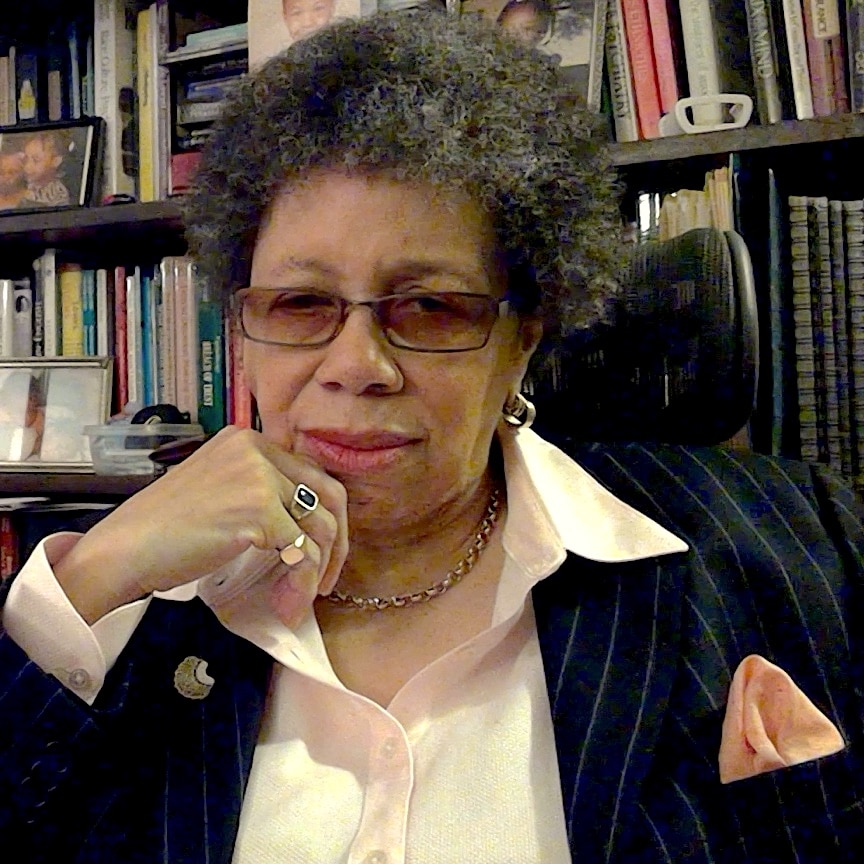
Can you tell me about your educational background and professional experience?
I attended East Orange New Jersey Public Schools at a time when there were classes that now would be considered gifted and talented groupings based on reading test scores. They demonstrated what we now know to be true about the effects of teacher expectations on student performance. My classmates and I were an ethnic mix in from an eclectic working class suburb, consistently told by our teachers that we were really smart and they expected us to do well. It seemed there was nothing that we could not learn and learning was highly valued,
I attended New York University as part of an early group of Martin Luther King Scholars where I majored in psychology, and the Derner Institute of Psychological Studies of Adelphi University where I completed my doctorate in Clinical Psychology.
What inspired you to become a psychologist?
I realized by my sophomore year in college that I was not enjoying the courses I was taking as a premed major as much as I enjoyed my psychology courses. I also could not readily connect my premed coursework with what I would be doing as a doctor but in my discovery of abnormal psychology and theories and theorists of psychotherapy in conjunction with being in therapy myself seemed like a better fit. I also had the opportunity to evaluate the kind of work that suited my personal temperament and personality. It seemed to me that people found me easy to talk to about many things they were not discussing with other people and that I had a capacity for empathy and compassion for someone’s struggles without experiencing them as though it was happening to me. History, biographies and memoirs were favorites and lead to a love of hearing people tell their stories and unravel the process of how we become who we are. Being in therapy at that time facilitated that interest.
What are some common misconceptions about the psychotherapy field that you encounter?
From patients common misconceptions include fears that needing the kind of assistance provided by therapy meant that you had an inappropriate need for help managing problems that you should solve on your own, that therapy would make you dependent on the process, that it was not helpful unless you saw a therapist who shared the same social identities as the therapist. From therapists the idea that good mental health is organized around dominant cultural norms or that therapy should be organized around getting people to fit withing those norms. Another misconception that I encounter more in therapists in training than experienced clinicians is the belief that you have to know everything and be able to answer any questions patients have despite the reality that none of us ever knows everything,
What has been the most rewarding part of your work?
Being a part of a process in which people discover strengths and insights they did not know they had; develop new strategies to write their own narratives and futures rather than be imprisoned by what others have constructed them to be. Its like a part of parenting when you see your child discover some part of the world or themselves for the first time especially when you have been a part of that process or journey.
What has been the most unexpected part of your work?
I never planned or expected to be a scholar or to have produced so much in the form of scholarly work that was so well received, much less the subject of many awards.
What is your hope for the field of psychotherapy?
I would like to see more accessibility of psychotherapy services to a wider range of people and for a wider range of people to be represented among patients in psychotherapy as well as among psychotherapists.
What are your future plans?
Continued work on psychotherapy’s contributions to supporting mothers if black children. I am under contract with APA press with my co authors Marie Miville and Angela Ferguson to produce a book we are writing about Liberation Psychotherapy with LGBT+ People of Color: The Rainbow that never was. The Rainbow is analogous to the notion of America being a melting pot that was more of a salad. The LGBT+ community of people of color were not a rainbow but more of a palette.