
SAP Who’s Who: Danny Wedding, PhD, MPH

Society for the Advancement of Psychotherapy
April 10, 2025
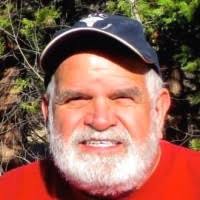
Danny Wedding, PhD MPH
Can you tell me about your educational background and professional experience?
I joined the USAF right after high school, and the Air Force made me a medic. I discovered I liked working with doctors and nurses, and I especially enjoyed working with patients on the psychiatry wards. I used the GI Bill to go to college (we were poor, and neither parent had graduated from high school), and I earned a masters degree in experimental psychology, planning to teach in community colleges. However, a year spent in Volunteers in Service to America (VISTA) working in Rikers Island Prison triggered an interest in psychopathology, and I applied to six clinical psychology doctoral programs. Four turned me down, but I was accepted to two PhD programs: Vermont and Hawaii. I walked around the block to consider my options, and decided to go to Hawaii (it was a cold night), in part to study with Leonard Ullmann, Tony Marsella and Roland Tharp. I received my PhD in clinical psychology from UH in 1979, and then did a postdoc at the University of Mississippi Medical Center with Terry Keane and other leading figures in behavior therapy. Along the way, I picked up graduate degrees in public health and English literature to supplement my psychology training.
While at Hawaii, Raymond Corsini picked me to be his literary heir for Current Psychotherapies:the book was first published in 1960; it is now in its 11th edition, and has been used to teach the rudiments of psychotherapy to move than a million students. Current Psychotherapies also allowed me to interact personally and professionally with numerous luminaries in psychotherapy who contributed chapters, including Albert Ellis, Irv Yalom, Carl Rogers, Tim Beck, Gary Yontef, Myrna Weissman, John Norcross, Larry Beutler, Lillian Comas-Díaz, and Ken Pope, among others.
What inspired you to become a psychologist?
Three events: (1) I was in Hong Kong on R&R and riding the Star Ferry to Kowloon when the man sitting next to me said “Excuse me, Sir,” walked to the back of the Ferry, and then jumped off before being swept up in the turbulence caused by the ferry. I’d never experienced a suicide before, and I found myself wondering about what could make a seemingly prosperous and successful businessman decide to end his life; (2) I worked with a man incarcerated at Rikers Island who had committed rape and murder, and I wanted to understand what could motivate such heinous behavior; (3) When I took my first psychology course through the University of Maryland Extension Program, the professor passed back our first exam and remarked, “Wedding, you’re a pretty sharp cookie!” I’ve never forgotten that remark (nobody had ever called me smart before!)
What are some common misconceptions about the psychotherapy field that you encounter?
Perhaps the most common is that all psychologists practice something akin to psychoanalysis (couch, dream analysis, etc.). A second concern is the perception that psychotherapy is just “the purchase of friendship.” Finally, I find that many patients enter therapy expecting deep analysis of childhood events and “breakthrough moments”; in contrast, psychotherapy is slow and sometimes tedious work with gradual and hardwon incremental gains.
What has been the most rewarding part of your work?
I’ve loved being a professor, and I cherish the opportunity I had to train thousands of medical students and psychology graduate students. I still maintain contact with many of my former students. I also enjoyed having a career that allowed frequent travel (e.g., I’ve completed Fulbrights in Thailand and South Korea, and I’ve directed graduate programs in Hong Kong, Tokyo and Mexico City). In addition, I’ve had an opportunity to work for the US Congress for two years — a year in the Senate working for Tom Daschle, and a year in the House of Representatives working for the Government Operations Committee chaired by John Conyers. Relatively few psychologists have these opportunities.
What has been the most unexpected part of your work?
I’ve been a longtime cinephile, and I watch two or three movies each week. This interest, combined with my clinical psychology training, eventually resulted in five editions of Movies and Mental Illness, two editions of Positive Psychology at the Movies, and a book in press, Movies, Miniseries, and Multiculturalism. I never anticipated I would devote so much time to watching, reading about, discussing, and writing about movies. I’m also proud of my (unexpected) work in international psychology — with Merry Bullock, Michael Stevens, and Amanda Clinton, I’ve just published The Handbook of International Psychology (2025), and I’m a past president of the APA Society of International Psychology (Division 52).
What is your hope for the field of psychotherapy?
I hope that psychotherapy in the US will continue to be grounded in evidence and supported by research. I suspect that artificial intelligence programs will be developed that accurately mimic the responses of skilled and highly trained psychotherapists, making access to therapy widely available for people who currently lack the resources needed to seek out treatment. I also anticipate that new, targeted and highly effective medications will be developed for many of the disorders psychologists treat, and I expect that eventually psychologists will be allowed to prescribe these medications in every state.
What are your future plans?
I retired from teaching in two Caribbean medical schools (Antigua and Sint Maarten) to move to Oregon where I primarily focus on being a wonderful grandparent to my grandchildren who live nearby. I hope to work with John Norcross in preparing the 12th edition of Current Psychotherapies, and I’ll soon finish up my time as senior editor for the Hogrefe/Division 12 (Clinical Psychology) book series on Advances in Psychotherapy: Evidence Based Practice. Sixty volumes have been published in this series to date.