
Pregnancy and Eating Disorders Among Cisgender Women
Zoe Ross-Nash, PsyD & Maria Ortiz, MS, LMHC, CEDS
March 3, 2025
General Mental Health, Pregnancy, and Cisgender Women
One in five adults are impacted by mental health concerns in the United States. There is nearly a 12% discrepancy between prevalence of mental health concerns in men (40%) and women (51.7%; National Alliance on Mental Illness, 2023). This divergence begins as young as puberty, where the ratio of depression for females and males is 1:1 before puberty and increases to 2:1 after onset. Zender and Olshanky (2009, as cited in Nakamura, 2005) indicates the impact of estrogen and progesterone as leading factors of this change.
According to the American Psychiatric Association (2017), depression, post-traumatic stress disorder, and eating disorders are the most common mental health concerns among women. Additionally, the National Institute of Health (2024) cites an increased vulnerability in mental health concerns in women during times of hormone change (e.g., during or after pregnancy, around the time of menstruation, and during menopause).
Mental health presentations in pregnant women, like anxiety and depression, have been associated with high-risk medical conditions in both the mother (e.g., preeclampsia) and the child (e.g., preterm birth; Rezaee & Framarzi, 2014). While body mass index (BMI) can be a misleading indicator of a person’s health status, a higher BMI was correlated with an increased risk of depression in pregnant women (Rezaee & Framarzi, 2014; Russell, 2024). Studies suggest those with a higher body weight may have internalized weight bias (IWB), which are the negative attitudes people hold regarding weight and size that are based on social stereotypes about one’s physical appearance. IWB is linked to increased depressive symptoms (Pearl et al., 2013) and has been associated with behavioral problems, such as eating disorders (Lee et al., 2019).
Eating Disorders Among Pregnant Women
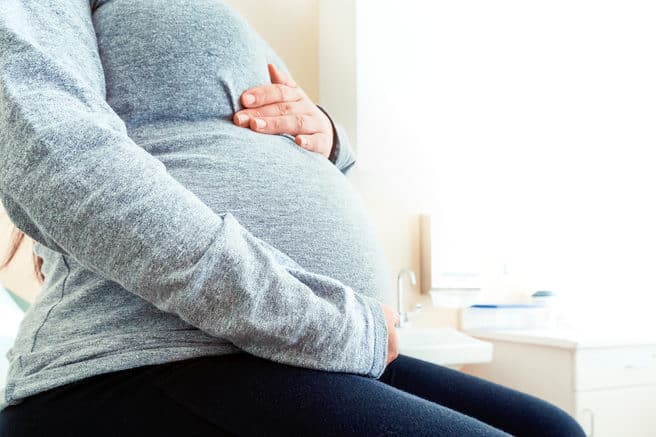
Pregnancy can be a sensitive time of life for women. Body and weight dissatisfaction may impact a person, even if there is no history of an eating disorder (Coker & Abraham, 2015). There is an increased attunement to negative self-perception, which can decrease self-esteem. There are more changes occurring in the body that have been happening since puberty, all while navigating societal expectations of thinness and motherhood (Sebastiani et al., 2020). The pressure of thinness is present before, during, and right after gestation, which has inspired the term “pregorexia” (Janas-Kozik et al., 2021). Tarchi and colleagues (2023) describe pregorexia as individuals engaging in eating disorder behaviors, like restriction or exercise, to counter the impact and changes that occur in pregnancy (i.e., changes in weight or body shape). Consequently, women enter a struggle between meeting the needs of their child while satisfying their eating disorder. Additionally, morning sickness can be triggering for individuals currently experiencing or in recovery from bulimia nervosa (McAdams, 2022). Fear of weight gain during pregnancy also may increase the risk of binge eating disorder (BED). During the first half of pregnancy, BED pathology is most associated with low social support, low partner satisfaction, and increased number of adverse life events (Knoph Berg et al., 2011). “Intentional binge eating may occur as well, as the binge is intellectualized as eating for two” (M. Ortiz, personal communication, January 20, 2025). Binge eating is significantly understudied as a whole, especially within pregnant women.
Eating Disorders Physiological Impact on Fertility, Conception, and Gestation
Eating disorders impact pregnancy prior to conception. Instances of amenorrhea and anovulation, the loss of menstrual period and loss of ovulatory egg release, are physical consequences associated with eating disorder pathology that have direct correlations to fertility (Letranchant et al., 2022). One study found that up to 48% of women seeking fertility assistance endorsed symptoms associated with disordered eating pathology (Hecht et al., 2021). A similar study found that 0.5-16.7% of women seeking fertility assistance also presented with current eating disorders. Of women who utilized pulsatile gonadotropin-releasing hormone as a fertility treatment, around 95% reported eating disorder pathology during their lifetime (Bailey-Straebler & Susser, 2023). Seeing as leptin impacts the hypothalamus, this is concurrent with the findings of reduced leptin levels in individuals with anorexia nervosa, a potential consequence of sustained restriction of nutrition and decrease in body fat (Letranchant et al., 2022). Nevertheless, it is important to note that merely energy expenditure alone, without the presence of body fat loss, can also mirror a similar effect on leptin and therefore impact fertility without weight changes; a phenomenon often associated with persistent strenuous exercise (Pinelli & Tagliabue, 2007). This urges providers to remember that a patient that engages in excessive workout regiments or long-duration exercises (e.g., marathons) may present with hormone-based fertility consequences independent of dietary intake or body changes.
Individuals with diagnosed anorexia nervosa may have heard from professionals that their fertility is impacted or note to themself that their lack of a menses may impede their ability to get pregnant. Though this is sometimes the case, individuals with anorexia nervosa are also susceptible to unplanned conception due to fertility assumptions associated with their disorder (Micali et al., 2013). Many individuals with histories of eating disorder diagnoses reported unclear perceptions of their disorder’s impact on fertility. One study found that different individuals had an array of reactions to warnings relating to fertility from professionals, including feeling that this information was weaponized as a manipulation tactic for change, feeling unclear as to whether their chances of conception would be impacted, or feeling threatened that their fertility was certainly impeded by their actions (Holmes, 2018). This emphasizes the need for continued accessibility to education and overall increased awareness for providers to ensure proper communication of information to those undergoing eating disorder treatment.
Following conception, pregnancy with concurrent anorexia nervosa is viewed as a high-risk pregnancy due to potential complications such as anemia, inadequate fetal growth in utero, and lower birth weights (Pan et al., 2022). Though the behaviors associated with eating disorder pathology may also impact both woman and fetus, low maternal BMI alone carries significant risk alone (Micali, 2008). Attitudes associated with discovering pregnancy is also found to be altered in women endorsing eating disorder pathology as they are more likely to experience adverse or negative reactions (Easter et al., 2011). This may be associated with a lack of confidence in the ability to tolerate both the impending physical body changes and psychological identity changes. Though fear of weight gain or tolerating weight changes may be present pre-conception through postpartum periods of time, studies have shown that dissatisfaction associated with body changes peaks in the third trimester (Coker & Abraham, 2015). There was also found to be a positive correlation between history of an eating disorder presentation and the development of hyperemesis gravidarum, a diagnosis associated with extreme vomiting and nausea, illustrating that past eating disorder pathology can impact the prenatal period (Stewart & Stotland, 2002). These findings illustrate the presence of confusion among professionals and patients alike, as another study found no significant differences between pregnancies of individuals with and without a history of diagnosed anorexia nervosa if currently in remission (Chaer et al., 2020). Continued research is needed in this area due to small sample sizes and inconsistent findings.
Postpartum Experiences in Women with Eating Disorder Histories
Unfortunately, there is a notion in today’s society that women are supposed to bounce back after giving birth, meaning to return to their pre-conception body composition. This poses a risk for women both with and without histories of eating disorders. Women with pre-existing or current eating disorders may experience increased weight changes during the prenatal period and may also experience a more significant drop in BMI during the first to six months postpartum when compared to their non-diagnosed counterparts (Zerwas et al., 2014). Ability to adapt to postpartum adjustments may be limited by sustained eating disorder presentation in the postpartum period (Knoph et al., 2013). One study found that 27.8% of postpartum women showed indications for orthorexic qualities (Tayhan et al., 2023). Orthorexic tendencies should be considered warning signs or precursors of eating disorder presentation, specifically in the postpartum period. One study found that 50% of the individuals relapsed with their eating disorder postpartum, making it as prevalent as postpartum depression (Makino et al., 2020). Postpartum depression also has been shown to have a positive correlation with the presence of both bulimia nervosa and BED (Mazzeo et al., 2006). The Archives of Women’s Mental Health highlights the importance of having specialized services available and accessible due to the high prevalence rates of postpartum eating disorder pathology (Pettersson et al., 2016).
As for breastfeeding, eating disorder pathology may reduce breastfeeding confidence, duration, and continuation (Kapa et al., 2022). Pressure from professionals relating to breastfeeding was found to influence symptom presentation relating to both depression and eating disorders (Thompson et al., 2023). Healthcare providers may urge or recommend continuation of breastfeeding, creating a pressure that an eating disorder may attempt to neutralize. It is imperative to note that dissatisfaction with body weight and appearance postpartum alone influenced attitudes toward breastfeeding, not just the presence of eating disorder pathology (Kaß et al., 2021).
Pregnancy as a Protective Factor to Eating Disorder Histories
Pregnancy can also serve as a powerful protective factor for folks with eating disorders, with more than 50% of women who have a previous history of disordered eating find improvement or recovery during this time (Kimmel et al., 2016). Some women express appreciation for their pregnant body for two reasons: 1) weight gain can be attributed to pregnancy rather than getting fat and, 2) weight gain was in the context of something more important than their eating disorder (e.g., the well-being of their unborn child). However, women with eating disorders report the early months of pregnancy to be the most difficult, as weight gain has begun, but pregnancy is not yet observable and may have the preoccupation of appearing “fat” (Fogarty et al., 2018, p. 11). Alternatively, pregnancy allowed permission for weight gain and rigid food rules imposed by the eating disorder relaxed. Additionally, previously triggering areas of the body, such as the abdominal area, became “beautiful” (Fogarty et al., 2018, p. 11).
Information for Obstetrics and Gynecology Providers for Pregnant Women with Eating Disorders
Lack of disclosure around eating disorders is common in medical and mental health settings. Non-disclosure in treatment was reported by more than 40% of participants in the eating disorder group in one study with shame being the mediating factor (Swan & Andrews, 2003). Disclosure could be impacted by other issues too, such as never being assessed (Fogarty et al., 2018). A full assessment on eating disorders is not necessary for every client, but screening questionnaires could better direct providers on who does need further intervention.
Equip (2024), the leading evidence-based virtual eating disorder treatment program, suggests open-ended questions such as, “How do you feel about your weight?” or “What does a typical day of eating look like for you?” This gives space for a conversation around body, weight, shape, and size, as well as nutritional needs. The Eating Disorder Screen for Primary Care (ESP) is a quick, four question assessment about eating patterns, shame around eating, weight concerns, and family or personal history of an eating disorder. If clinically indicated, the Eating Disorder Examination Questionnaire (EDE-Q) and the Eating Attitudes Test (EAT-26) are widely used as a comprehensive assessment.
As previously discussed, people with eating disorders may not always be forthcoming about their pathology. When doing a physical exam, Equip (2024) recommends looking for swollen salivary glands, calluses on the knuckles, dental decay, lanugo hair, bradycardia, and changes in weight. Collaborative care with mental health professionals, dietitians, psychiatrists, and obstetrics is highly recommended when working with pregnant women with eating disorders.
Training Opportunities on Eating Disorders and Pregnancy
- Eating Recovery Center offers providers the opportunity to view the recording from Dr. Crawford’s Pregnancy, Infertility, and Eating Disorders presentation by using code Prengancy&ED through the link found here. Another link will be sent via email to access the course in the Continuing Education portal.
- Eating Recovery Center is also having a five-week training on eating disorders and infertility, pregnancy, pregnancy loss, post-partum, and raising children while in recovery. The training will start March 20, 2025 and will be held every Thursday. Access to their continuing education events can be found here.
- The Institute of Psychiatry, Psychology & Neuroscience has a two-hour training video on eating disorders and pregnancy that can be accessed here.
- Eating Disorders and Pregnancy website found here also has many resources for providers seeking additional information and training.
Tags
About the Authors
Zoe Ross-Nash, PsyD
Dr. Zoe Ross-Nash (she/her) earned her PsyD in Clinical Psychology at Nova Southeastern University and completed an APA accredited internship at the University of California, Davis in the Eating Disorder Emphasis. Dr. Ross-Nash owns a private practice called, Equilibrium Health Advantage and was previously an assistant professor at Ponce Health Sciences University and wrote the book, "The Eating Disorder Workbook for Pilates and Yoga Instructors".
Ross-Nash won the Division 29 Student Excellence in Clinical Practice Award in 2022 and is the Editor for Electronic Communications for the division, after serving three years as the associate editor. Zoe's clinical interests include trauma, eating disorders, wellness, mentorship, and advocacy.
She is originally from Allendale, New Jersey and earned her bachelor's degree in Psychology with a minor in Human Service Studies and Dance from Elon University. In her spare time, Zoe likes to practice yoga and ballet, read and write poetry, and try new restaurants with her loved ones.
Maria Ortiz, MS, LMHC, CEDS
Maria Ortiz, LMHC (she/her) graduated with a Master of Science in Clinical Mental Health Counseling from Keiser University. She currently is a co-owner of BreakFree Therapy Services, LLC. Maria provides individual, group, and family psychotherapy specializing in eating disorders for all ages with an emphasis on children and faith-based counseling upon request. As a D1 gymnast, Maria also is equipped to work with athletes as well.
Maria is a leading voice in the eating disorder community, and was a Key Note Speaker at “Normal is Overrated”, a Kids Minds Matter Event.
She continues to run in-services and educational trainings for professionals at neighboring community mental health centers and hospital systems given her expertise in eating disorders.
Previously she authored, edited, and managed a monthly eating disorder blog disseminating pertinent information to her community.
Maria received her Bachelor of Science in Human Physiology from University of Iowa which allows her to provide collaborative and informed care needed within the eating disorder field. She is paneled on the National Registry Emergency Medical Technician and has experience working in rehabilitation for a dual diagnosis inpatient/residential facility.
Citation
References
American Psychiatric Association. (2017). Mental health disparities, women’s mental health. [Web Article]. Retrieved from: https://www.psychiatry.org/getmedia/aa325a61-5b60-4c71-80f1-dc80cf83c383/Mental-Health-Facts-for-Women.pdf
Bailey-Straebler, S. M., & Susser, L. C. (2023). The impact of eating disorders on reproductive health. The Primary Care Companion for CNS Disorders, 25(4). https://doi.org/10.4088/pcc.22nr03475
Chaer, R., Nakouzi, N., Itani, L., Tannir, H., Kreidieh, D., El Masri, D., & El Ghoch, M. (2020). Fertility and reproduction after recovery from anorexia nervosa: A systematic review and meta-analysis of long-term follow-up studies. Diseases, 8(4), 46. https://doi.org/10.3390/diseases8040046
Coker, E., & Abraham, S. (2015). Body weight dissatisfaction before, during and after pregnancy: A comparison of women with and without eating disorders. Eating and Weight Disorders, 20(1), 71–79. https://doi.org/10.1007/s40519-014-0133-4
Easter, A., Treasure, J., & Micali, N. (2011). Fertility and prenatal attitudes towards pregnancy in women with eating disorders: Results from the Avon Longitudinal Study of Parents and Children. BJOG: An International Journal of Obstetrics and Gynaecology, 118(12), 1491–1498. https://doi.org/10.1111/j.1471-0528.2011.03077.x
Equip. (2024). The role of OB/GYNs in identifying eating disorders: Key red flags to watch for. [Web Article]. Retrieved from: https://equip.health/articles/treatment-and-recovery/obgyn-eating-disorder-red-flags
Fogarty, S., Elmir, R., Hay, P., & Schmied, V. (2018). The experience of women with an eating disorder in the perinatal period: A meta-ethnographic study. BMC Pregnancy and Childbirth, 18, 1-18.
Hecht, L. M., Hadwiger, A., Patel, S., Hecht, B. R., Loree, A., Ahmedani, B. K., & Miller-Matero, L. R. (2021). Disordered eating and eating disorders among women seeking fertility treatment: A systematic review. Archives of Women’s Mental Health, 25(1), 21–32. https://doi.org/10.1007/s00737-021-01156-x
Holmes, S. (2018). Responses to warnings about the impact of eating disorders on fertility: A qualitative study. Sociology of Health and Illness, 40(4), 670–686. https://doi.org/10.1111/1467-9566.12676
Janas-Kozik, M., Żmijowska, A., Zasada, I., Jelonek, I., Cichoń, L., Siwiec, A., & Wilczyński, K. M. (2021). Systematic review of literature on eating disorders during pregnancy—Risk and consequences for mother and child. Frontiers in Psychiatry, 12(777529). https://doi.org/10.3389/fpsyt.2021.777529
Kapa, H. M., Litteral, J. L., Keim, S. A., Jackson, J. L., Schofield, K. A., & Crerand, C. E. (2022). Body image dissatisfaction, breastfeeding experiences, and self-efficacy in postpartum women with and without eating disorder symptoms. Journal of Human Lactation, 38(4), 633–643. https://doi.org/10.1177/08903344221076529
Kaß, A., Dörsam, A. F., Weiß, M., Zipfel, S., & Giel, K. E. (2021). The impact of maternal eating disorders on breastfeeding practices: A systematic review. Archives of Women’s Mental Health, 24(5), 693–708. https://doi.org/10.1007/s00737-021-01103-w
Kimmel, M. C., Ferguson, E. H., Zerwas, S., Bulik, C. M., & Meltzer‐Brody, S. (2016). Obstetric and gynecologic problems associated with eating disorders. International Journal of Eating Disorders, 49(3), 260-275.
Knoph, C., Von Holle, A., Zerwas, S., Torgersen, L., Tambs, K., Stoltenberg, C., Bulik, C. M., & Reichborn‐Kjennerud, T. (2013). Course and predictors of maternal eating disorders in the postpartum period. International Journal of Eating Disorders, 46(4), 355–368. https://doi.org/10.1002/eat.22088
Knoph Berg, C., Torgersen, L., Von Holle, A., Hamer, R. M., Bulik, C. M., & Reichborn-Kjennerud, T. (2011). Factors associated with binge eating disorder in pregnancy. The International Journal of Eating Disorders, 44(2), 124–133. https://doi.org/10.1002/eat.20797
Lee, M. S., Gonzalez, B. D., Small, B. J., & Thompson, J. K. (2019). Internalized weight bias and psychological wellbeing: An exploratory investigation of a preliminary model. PloS One, 14(5). https://doi.org/10.1371/journal.pone.0216324
Letranchant, A., Corcos, M., Nicolas, I., & Robin, M. (2022). Anorexia nervosa, fertility and medically assisted reproduction. Annales d’Endocrinologie, 83(3), 191–195. https://doi.org/10.1016/j.ando.2022.04.012
Makino, M., Yasushi, M., & Tsutsui, S. (2020). The risk of eating disorder relapse during pregnancy and after delivery and postpartum depression among women recovered from eating disorders. BMC Pregnancy and Childbirth, 20(1). https://doi.org/10.1186/s12884-020-03006-7
Mazzeo, S. E., Slof‐Op’t Landt, M. C. T., Jones, I., Mitchell, K., Kendler, K. S., Neale, M. C., Aggen, S. H., & Bulik, C. M. (2006). Associations among postpartum depression, eating disorders, and perfectionism in a population‐based sample of adult women. International Journal of Eating Disorders, 39(3), 202–211. https://doi.org/10.1002/eat.20243
McAdams, C. (2022). Managing pregnancy when mom has an eating disorder. UT Southwestern. [Web Article]. Retrieved from: https://utswmed.org/medblog/pregnancy-eating-disorder-anorexia/
Micali, N. (2008). Eating disorders and pregnancy. Psychiatry, 7(4), 191–193.
Micali, N., dos‐Santos‐Silva, I., De Stavola, B., Steenweg‐de Graaf, J., Jaddoe, V., Hofman, A., Verhulst, F., Steegers, E., & Tiemeier, H. (2013). Fertility treatment, twin births, and unplanned pregnancies in women with eating disorders: Findings from a population‐based birth cohort. BJOG: An International Journal of Obstetrics and Gynaecology, 121(4), 408–416. https://doi.org/10.1111/1471-0528.12503
Nakamura, R. (2005, November 30-December 1). Surgeon General’s workshop on women’s mental health [Workshop report]. U.S. Public Health Service, Denver, Colorado, USA.
National Alliance on Mental Illness. (2023). Mental health by the numbers. [Web Article]. Retrieved from: https://www.nami.org/about-mental-illness/mental-health-by-the-numbers/#:~:text=You%20Are%20Not%20Alone,-DOWNLOAD%20INFOGRAPHICS&text=22.8%25%20of%20U.S.%20adults%20experienced,2021%20(14.1%20million%20people).
National Institute of Health. (2024). Women and mental health. [Web Article]. Retrieved from: https://www.nimh.nih.gov/health/topics/women-and-mental-health
Pan, J. R., Li, T. Y., Tucker, D., & Chen, K. Y. (2022). Pregnancy outcomes in women with active anorexia nervosa: A systematic review. Journal of Eating Disorders, 10(1). https://doi.org/10.1186/s40337-022-00551-8
Pearl, R. L., White, M. A., & Grilo, C. M. (2014). Weight bias internalization, depression, and self-reported health among overweight binge eating disorder patients. Obesity, 22(5), E142–E148. https://doi.org/10.1002/oby.20617
Pettersson, C. B., Zandian, M., & Clinton, D. (2016). Eating disorder symptoms pre- and postpartum. Archives of Women’s Mental Health, 19(4), 675–680. https://doi.org/10.1007/s00737-016-0619-3
Pinelli, G., & Tagliabue, A. (2007). Nutrition and fertility. Minerva Gastroenterologica e dietologica, 53(4).
Rezaee, R., & Framarzi, M. (2014). Predictors of mental health during pregnancy. Iranian Journal of Nursing and Midwifery Research, 19(7).
Russel, H. (2024). Here’s a weighty question for you: What is a healthy BMI? University of Rochester Medical Center. [Web Article]. Retrieved from: https://www.urmc.rochester.edu/news/publications/health-matters/is-bmi-accurate
Sebastiani, G., Andreu-Fernández, V., Herranz Barbero, A., Aldecoa-Bilbao, V., Miracle, X., Meler Barrabes, E., Ibañex, A. B., Astals-Vizcaino, M., Ferrero-Martínez, Silvia, Gómez-Roig, M. D., & García-Algar, O. (2020). Eating disorders during gestation: Implications for mother's health, fetal outcomes, and epigenetic changes. Frontiers in Pediatrics, (8)587.
Stewart, D., & Stotland, N. (2002). Psychological aspects of women’s health care, the interface between psychiatry and obstetrics and gynecology, 2nd edition. Journal of Midwifery and Women’s Health, 47(4), 297–297. https://doi.org/10.1016/s1526-9523(02)00257-x
Swan, S., & Andrews, B. (2003). The relationship between shame, eating disorders and disclosure in treatment. British Journal of Clinical Psychology, 42(4), 367-378.
Tarchi, L., Merola, G. P., Selvi, G., Caprara, E., Pecoraro, V., Cassioli, E., Rossi, E., Petraglia, F., Ricca, V., & Castellini, G. (2023). Pregorexia: A systematic review and meta-analysis on the constructs of body image dissatisfaction and eating disturbances by gestational age in the peripartum. Eating and Weight Disorders, 28(1), 64. https://doi.org/10.1007/s40519-023-01595-8
Tayhan, F., Doğan, G., Yabancı Ayhan, N., & Sancar, C. (2023). Assessment of eating disorders and depression in postpartum women. European Journal of Clinical Nutrition, 78(4), 314–319. https://doi.org/10.1038/s41430-023-01384-7
Thompson, K. A., White, J. P., & Bardone-Cone, A. M. (2023). Associations between pressure to breastfeed and depressive, anxiety, obsessive-compulsive, and eating disorder symptoms among postpartum women. Psychiatry Research, 328(115432). https://doi.org/10.1016/j.psychres.2023.115432
Zerwas, S. C., Von Holle, A., Perrin, E. M., Cockrell Skinner, A., Reba‐Harrelson, L., Hamer, R. M., Stoltenberg, C., Torgersen, L., Reichborn‐Kjennerud, T., & Bulik, C. M. (2014). Gestational and postpartum weight change patterns in mothers with eating disorders. European Eating Disorders Review, 22(6), 397–404. https://doi.org/10.1002/erv.2314
Comments
Be the first to share your thoughts.
Leave a comment
Your email address will not be published. Comments are reviewed before they appear.