
Mental Health Impacts of Climate Change: A Transdiagnostic Approach – Part I


Maggie Grandsire, BS & Zoe Ross-Nash, PsyD
June 24, 2025
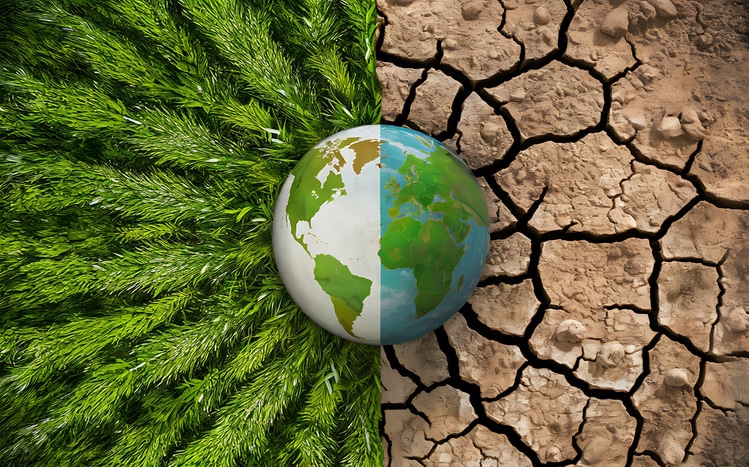
Undoubtedly, climate change is causing lasting impacts on our natural environment (Intergovernmental Panel on Climate Change, 2023). The climate crisis is exacerbating unprecedented extreme weather events, like Hurricane Helene in North Carolina in 2024 (Thiem & Lindsey, 2024) and the devastating Los Angeles wildfires in 2025 (Smith, 2025). It is increasing the risk of more severe and frequent pandemics (Hamichi et al., 2020; Romanello et al., 2024) and causing mass displacement and migration due to factors such as failing food production systems (Paterson, 2020), rising sea levels (Intergovernmental Panel on Climate Change, 2023), and exacerbating inter and intra-state conflict (Koubi, 2019). As climate change worsens, so does the threat of economic collapse and social unrest (Intergovernmental Panel on Climate Change, 2023). Something less talked about yet far more insidious is the effect that climate change and all its manifestations can have on mental health (Berry et al., 2010).
It is important to understand that each of these events and their consequential psychopathologies are not directly caused by climate change exclusively as the onset of mental illness is complicated and, oftentimes, a combination of many factors. However, increased research at the intersection of climate change and mental health indicates that climate change-related events are associated with an increase in mental illness, psychiatric hospitalizations, and suicide rates (Charlson et al., 2021).
Unfortunately, the heaviest burden and most disastrous impact of the climate crisis falls on the communities who contribute to it the least (Gentle & Maraseni, 2012; Romanello et al., 2024). Nepal, a country whose contributions to climate change have been described as “negligible,” is warming at a higher rate than the global average (Gentle & Maraseni, 2012, p. 24). Nepali people rely on regular monsoon patterns for agricultural production, but climate change has caused erratic rainfall, unpredictable monsoon seasons, glacial retreat, landslides, and drought, which all have negative effects on food security, water scarcity, and economic and financial stability (Gentle & Maraseni, 2012). Natural disasters, let alone more frequent natural disasters, also affect the Nepali people psychologically. Following an earthquake, one in five Nepali people exhibited dangerous drinking habits consistent with symptoms of substance use disorder (Kane et al., 2018). Just as climate change disproportionately burdens more vulnerable communities physically, economically, socially, etc., it also has hazardous downstream effects on the psychological well-being of these communities.
Trauma, Post-Traumatic Stress Disorder, and Climate Change
Increasing surface temperatures and warming waters affect the frequency and severity of extreme weather events (EWE; DeLoss, 2024; NASA, 2024). Unlike other psychopathologies related to climate change, symptoms of post-traumatic stress disorder (PTSD) and experiences following natural disasters is well-documented (Neria et al., 2008). Floods, hurricanes, earthquakes, and wildfires are all associated with a PTSD diagnosis and although not everyone affected by a natural disaster develops PTSD, particular subsets of the population tend to be more at-risk of developing this disorder (Asarnow et al., 1999; Bandla et al., 2019; DeSalvo et al., 2007; Galea et al., 2008a, 2008b; McMillen et al., 2002; Neria et al., 2008; Ruskin et al., 2018; Schwartz et al., 2015; Silveira et al., 2021; Taioli et al., 2018; To et al., 2021). Those who are in closer proximity and/or were more exposed to the disaster are at an increased risk of developing PTSD (Bandla et al., 2019; Galea et al., 2008b; Neria et al., 2008; Schwartz et al., 2015; Silveira et al., 2021). Additionally, women are more likely to develop PTSD post-EWE (Bandla et al., 2019; DeSalvo et al., 2007; Galea et al., 2008a, 2008b), as are people with pre-existing mental health conditions (Asarnow et al., 1999; McMillen et al., 2002). Other factors that seem to be predictive of the development of PTSD post-natural disaster are those who experienced financial loss (Galea et al., 2008b), those in a lower-income bracket (Galea et al., 2008a), those who do not have property insurance (DeSalvo et al., 2007), and those without access to medical care (Ruskin et al., 2018). Low social support also seems to be predictive of the development of PTSD after experiencing a natural disaster (Galea et al., 2008a, 2008b).
Exposure to an EWE, however, is not the only studied pathway regarding the development of PTSD following a disaster. Increased vulnerability to developing PTSD symptoms in the wake of an EWE has been documented for people experiencing displacement from their home or community, particularly if one is exposed to violence or loss (Shultz et al., 2019). Additionally noteworthy, Woodbury (2019) posits that the climate crisis in itself is potentially traumatic, as it is an unprecedented and life-threatening phenomenon that causes many people to feel hopeless and doomed.
Climate Change, Rising Temperature, and Psychiatric Medications
Increases in temperatures, especially during a heat wave, are also dangerous to those who take psychiatric medications to treat mental health disorders (Batscha, 1997; Bouchama, 2007; Kaiser et al., 2001). The use of psychotropic medication can interfere with homeostasis by inhibiting the body’s ability to regulate its temperature (Lõhmus, 2018), therefore putting people who take medication at an increased risk for heat-related risks or even death in hotter weather (Batscha, 1997). Lithium, a mood stabilizer used to treat bipolar disorder and major depressive disorder, can become toxic and potentially dangerous to people who sweat heavily (Schmidt, 2023). Similar effects have been found in other antipsychotics, anticholinergics, antidepressants, and other types of psychotropic drugs (Lõhmus, 2018). As climate change worsens and temperatures continue to increase, it’s especially important for people who are taking psychiatric medication to remain especially cautious to prevent and/or mitigate heat-related complications.
Environmental Action as a Protective Mechanism
Interestingly, Sangervo et al. (2022) discovered that climate anxiety, even in the most severe instances, is positively correlated with climate action, suggesting that climate anxiety can warrant adaptive responses to the climate crisis. In addition to this study’s findings, a study by Ojala (2011) found significant associations between hope and climate action, suggesting that hope is also an important factor in motivating people to take pro-environmental action. Reciprocally, research indicates that activism protects against feelings of hopelessness, which provides a similar effect for those living with clinical depression. Activism, specifically collective activism, serves as a protective factor against depression in people experiencing climate change anxiety as being a part of a community or a group that is passionate about environmental action can encourage a sense of connection and social support (Schwartz et al., 2023). Additionally, being a part of collective environmental action can foster a sense of agency and purpose, which can protect against the paralyzing effects of climate-related distress (Clayton & Parnes, 2025). The current state of the world has resulted in increasing levels of loneliness to where it is now considered an epidemic (Buecker et al., 2021). More than ever, collective action is necessary to protect against climate-related distress and to create a sense of hope, which can foster meaningful change to improve the state of individual mental health, the global climate, and the future.
Conclusion on Mental Health and Climate Change
Both the climate crisis and its consequential effects on mental health are worsening and impacting the global population, which is disproportionately more burdensome for marginalized populations (Gentle & Maraseni, 2012; Romanello et al., 2024). It is important for people, especially politicians and those with political influence, to understand the various ways that climate change can impact people’s mental health and well-being. To be resilient in the face of adversity as scalable as climate change, we must recognize maladaptive behaviors and implement coping strategies so that we can create meaningful and lasting change both as individuals and as a greater community.
If you are interested in more information on a transdiagnostic approach to climate change, see part two of this article, Mental Health Impacts on Climate Change: Transdiagnostic Approach – Part II.