
Ethics of Addressing Police Brutality and Racial Violence During the Black Lives Matter Movement

Apryl Alexander, Psy.D.
August 27, 2020
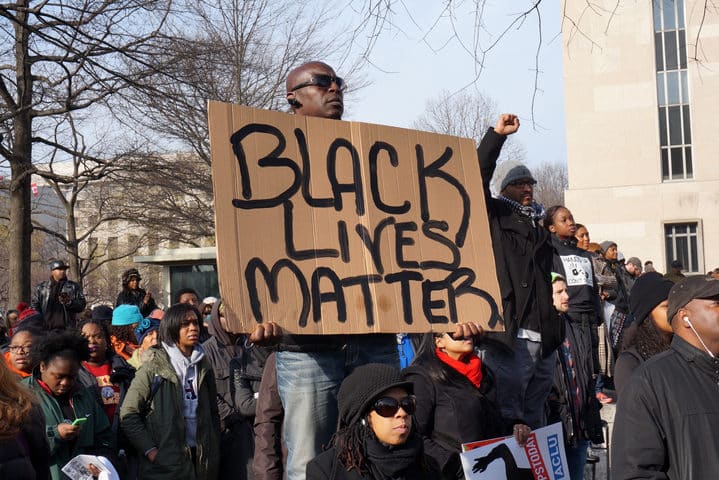
A recent article from The New York Times revealed that the Black Lives Matter movement might be the largest social justice movement in United States History (Buchanan et al., 2020). The profound and continued systemic inequities and injustices towards Black people and communities have been observed with recent deaths of George Floyd, Breonna Taylor, Ahmaud Arbery, Tony McDade, Elijah McClain, and many other Black people in the United States. Young Black men have a 1 in 1,00 chance of being killed by police over the life course, and police-involved killings are the sixth leading cause of death among young Black men (Edwards et al., 2019). There has also been an increase in hate crime reports in the United States is experiencing an increase of reported hate crimes following the 2016 presidential election (Federal Bureau of Investigation, 2018). Nationwide and internationally, people are having tough conversations about race and racism.
If we know racial violence and police brutality are significantly impacting individuals, families, and communities of color, do we have an ethical obligation to address racial stress and violence? Multicultural scholars and liberation psychologists have long reflected on the ways mental health professions have used various forms of oppression (Duran et al., 2008). As the country is discussing ways to engage in anti-racism, psychologists should also be challenged to bring this philosophy to their work.
Racial Stress and Violence
Racism affects individuals, groups, institutions, and systems. Racial and historical trauma beginning at the time of colonialization in the United States has had profound effects on Black and Indigenous communities. Racial discrimination can induce stress and frustration and adversely affect mental and physical health (Carter & Forsyth, 2010; Carter et al., 2017; Williams et al., 2018). These effects have been found to be intergenerational as neurobiologists continue to find data on the intergenerational transmission of trauma via epigenetics (Yehuda et al., 2001; 2005). Therefore, racial stress and trauma have emerged as an important focus of research (Carter, 2007). However, racial and historical trauma rarely appear to be integrated into conceptualizations of trauma—including my own research on poly-victimization—nor reflected on frequently used measures of traumatic experiences. As psychologists strive to embrace a culturally humble stance, addressing factors related to racial stress in assessment and treatment is a necessity. Recent research has revealed Black children and adolescents experience racial stress on a regular basis. English and colleagues (2020) examined the daily acts of racial discrimination experienced by Black youth in the United States. Results revealed a per-participant average of 70 experiences of racial discrimination over a 14-day period. The youth endorsed experiencing a number of items on a daily basis including, but not limited to, seeing someone lock the doors of their car as the youth passed by; teachers treating them as though they are not smart; a peer pointing out that they fit a stereotype about their race/ethnicity; people talking down to them or ignoring them, and being called bad names/slurs. In reviewing this article, I wondered what more we can do in order to prevent these experiences from occurring? How do we end the pathway of a lifetime of incidents of racial stress and trauma?
The Black Lives Matter Movement was developed based on the ongoing experiences of racial stress and trauma toward Black individuals and communities. In 2013, three queer Black women (Alicia Garza, Patrisse Cullors, and Opal Tometi) created the Black Lives Matter movement in response to the murder of Trayvon Martin and the countless other acts of state-sanctioned violence toward Black people in the United States (Garza, 2014; Garza, 2018). The movement has expanded beyond addressing police brutality and addresses other forms of systemic inequities, including criminalization of Black youth in schools and gentrification in historically Black communities. The Movement for Black Lives lists a number of policy reform efforts centered on racial/ethnic disparities during COVID-19, defunding law enforcement, and reparations. The Black Lives Matter movement follows in the footsteps of the 1960s civil rights movement in creating a call to action for systemic change and an end to anti-Black racism. A 2016 study found 65% of Black college students in a study were involved in the Black Lives Matter activism either through online or offline participation (Hope et al., 2016). In examining the psychological impact of this movement, Seaton et al. (2020) found that Black American adults who supported the goals of Black Lives Matter also reported positive physical health. Although the study did not directly examine improved psychological health and well-being, the authors suggest that “social justice activism serves as a coping response for marginalized groups increasing their self-confidence” and mental health outcomes. I believe these results align with models of liberation psychology and radical healing.
Liberation Psychology and Radical Healing
Previously, I discussed the importance of social justice and advocacy as ethical issues in a previous article (Alexander, 2017). Hargons and colleagues (2017) note that counseling psychologists and Black Lives Matter activists “seek to intervene against the oppression Black people face at the collective, relational, and personal levels” (p. 877). Liberation psychology aims to center individuals who’ve been historically marginalized and identify ways to help them thrive through healing and liberation. Duran et al. (2008) states, “Becoming aware of the various forms of cultural oppression and social injustices that adversely affect the mental health of clients from devalued groups in U.S. society as well as the psychological development of many Western-trained mental health practitioners is an essential component of the process of liberation psychology” (p. 289). Similar to multicultural psychology and feminist psychology/therapies, it is believed that liberation psychology should be integrated into general psychology training, research, and practice and not relegated to being classified as an isolated school of thought. In order to address systemic and institutional forms of oppression and racism (i.e., poverty, stress, barriers to access to care), liberation psychology is needed. Moane (2003) notes that liberation psychology must focus on structural levels (political, economic, and cultural) in addition to the individual level.
Radical healing has been defined as “being able to sit in a dialectic and exist in both spaces of resisting oppression and moving toward freedom” (French et al., 2020, p. 24). French et al. (2020) further notes, radical healing is a process that “acknowledges the pain of oppression while fostering hope for justice and psychopolitical freedom” (p. 25). The framework embraces that social action is a critical component of psychological healing from oppression and oppressive systems. It appears the Black Lives Matter movement in advocating for accountability, justice, and reconciliation, is inherently advocating for radical healing for Black people and communities.
Future Directions in Advocacy
Liberation psychology should be integrated into all aspects of the practice of psychology. As psychologists are thinking about the influence of the Black Lives Matter movement on their work, mental health and healing must include seeking liberation and healing for Black people and communities. Social justice is a major aspect of psychology training and practice (Leong et al., 2017; Mallinckrodt et al., 2014; Vasquez, 2012).
Moreover, the field can examine ways in which it is more active and visible in support of communities of color. For instance, social justice activists have discussed the role of psychologists in eliminating Native-themed mascots, logos, and nicknames as a means of ending symbols of structural racism, particularly after the American Psychological Association’s (APA) 2005 resolution calling to eliminate stereotypic representations of Indigenous people (American Psychological Association, 2005; Steinfeldt et al., 2012). Related to the topics of racial stress and discrimination, can we use our knowledge to prevent and address racial and historical trauma? If decades of police reform have not been effective in reducing state-sanctioned violence, can psychologists have “a seat at the table” with activists in discussing alternatives to policing that often include increasing mental health supports? Currently, the APA is creating a task force—Task Force on Strategies to Eradicate Racism, Discrimination, and Hate—dedicated to creating “a set of evidence-based resources to disseminate to psychologists and others to use in efforts to prevent and address racism, discrimination, and hate” (American Psychological Association, 2020).
Lastly, we need to examine the centering of Black lives within the field of psychology and academia. Black students, faculty, and practitioners frequently experience discrimination, racism, and microaggressions (see Sue et al., 2007) from colleagues, other students, and clients. In the pipeline of training and mentoring psychologists, how can we reduce racial stress and emphasize radical healing within our own field?