
Psychotherapy Process
Explore the dynamics and stages of the psychotherapy process, from the initial client assessment to the therapeutic interventions that promote healing. This section provides insights into the complexities of therapeutic relationships and strategies to enhance treatment effectiveness.
254 articles found

Clinicians Self-Judgment of Effectiveness
Background Research has demonstrated significant between-therapist variability in both process (e.g., working alliance) and outcome (e.g., symptom reduction), pointing to the so-called therapist effect (Baldwin & Imel, 2013). Although still in its infancy with regard to empirical scrutiny, thinking in this area has largely assumed that more effective therapists possess specific characteristics that foster consistently […]

James F. Boswell, Ph.D. + 1 more
October 30, 2016

What About the Words?
By ‘augmenting human intellect’ we mean increasing the capability…to approach a complex problem situation…a way of life in an integrated domain where hunches, cut-and-dry, intangibles, and the human ‘feel for a situation’ usefully co-exist with powerful concepts, streamlined terminology and notation, sophisticated methods, and high-powered electronic aids. (Engelbart, 1962/2001, p.1) Psychotherapy is certainly a complex […]

Brian T. Pace, M.S. + 7 more
October 25, 2016
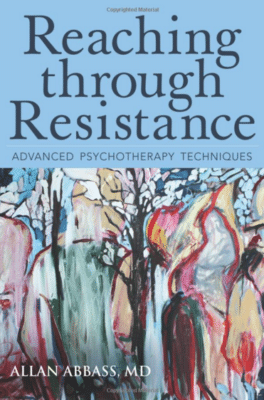
Finding the Right Fit for Intensive Short Term Dynamic Psychotherapy
If you are a psychotherapist of a certain age you no doubt remember the 1982 New York Times Magazine article on Short-Term Dynamic Psychotherapy (STDP; Davanloo, 1980) by journalist Dava Sobel. In contrasting STDP (“the most aggressive form of psychic medicine to rest on the principles of Sigmund Freud”) to traditional psychoanalytic psychotherapy, Sobel noted, […]

David Hellerstein, M.D.
September 22, 2016

Is Expertise in Psychotherapy a Useful Construct?
This question was asked by Clara Hill as a moderator for a structured discussion section on expertise in psychotherapy in the last international meeting of the Society for Psychotherapy Research in Philadelphia in June 2015. The background for the discussion was an article by Tracey, Wampold, Lichtenberg, and Goodyear (2014) in which the authors argued […]

Michael Helge Rønnestad, Ph.D.
September 18, 2016

Creating a Pro-justice Therapeutic Environment
In his article, Paré explores the way therapeutic conversations can serve as an arena in which both justice can be enacted and injustices can be perpetuated. Paré asserts that, given that our society is not entirely just, and given that therapeutic conversations take place within an unjust context, injustices are inevitably enacted in psychotherapy. In […]

Hayley Fitzgerald B.A. + 1 more
August 18, 2016

Evaluating the Importance of the Therapist-Client Relationship
Currently, there is a paradigm clash between different visions of the nature of psychotherapy. The clash is not merely about what psychotherapy is, how it helps, and how it should be practiced. It is also about the nature of scientific evidence and what the evidence shows about effective practice. In the forward to this book […]

Arthur C. Bohart, Ph.D.
August 2, 2016

Are You Any Good…as a Therapist?
Introduction Are you any good as a therapist? Overall, therapists seem to be quite a confident group. A study by Walfish, McAllister, O’Donnell, and Lambert (2012) asked 129 therapists to compare their psychotherapy results to those of their peers. They found that 25% of the therapists estimated that their results were in the upper 10% […]

S. (Jeb) Brown, Ph.D. + 2 more
April 10, 2016

Humility
“The humble man makes room for progress; the proud man believes he is already there.” Ed Parker (1983) In their series of articles, Tracey and colleagues (Tracey, Wampold, Goodyear, & Lichtenberg, 2015; Tracey, Wampold, Lichtenberg, & Goodyear, 2014) explore barriers psychotherapists face in developing expertise. Specifically, Tracey et al. (2014, 2015) noted that psychotherapists often (a) […]

Joshua N. Hook, Ph.D. + 3 more
March 20, 2016

Therapist Characteristics that Impact Outcome
Ample research suggests that therapists differ in their level of effectiveness (Baldwin & Imel, 2012; Blow et al., 2007; Wampold, 2001). Even more striking is that therapist effects appear to be larger than treatment effects (e.g., Lindgren et al., 2010). Moreover, therapist training, experience, and theoretical orientation do not appear to explain the majority of […]

Jenelle Slavin-Mulford, Ph.D.
March 13, 2016

Parallel Process in Multicultural Supervision
One of my best friends is a skilled storyteller. During our internship year, she would regale the staff of the counseling center with tales of suspicious occurrences surrounding Area 51, the “secret” government location where UFOs are purportedly stored and studied. She would wax on about mysterious sightings and disappearances with oratory inflections akin to […]

Heidi A. Zetzer, Ph.D.
October 28, 2015

Clients’ Perspectives on Treatment Failure
Despite our best efforts as therapists or supervisors, some clients will fail to improve while in treatment. A significant amount of research has been conducting seeking to identify the client, therapist, treatment, and process variables associated with client change. A number of methods have been developed to decrease the number of clients who stay the […]

Joshua K. Swift, Ph.D.
October 25, 2015

Reflections on Authenticity in Psychotherapy
Lately I’ve been thinking about therapist authenticity. Since moving to private practice three years ago I have worked primarily with adult survivors of childhood sexual, physical, and emotional abuse. Due to years of chronic violence during developmentally important periods, clients’ life experiences are typically characterized by an insecure (often disorganized) attachment style, a chronically activated […]

Suzanne Friedman, Ph.D.
October 13, 2015