
Beyond the Binary: Challenging American Gender Policies Through Philosophy, Biology, and Cultural History

Limor Ast, LMFT
April 21, 2025
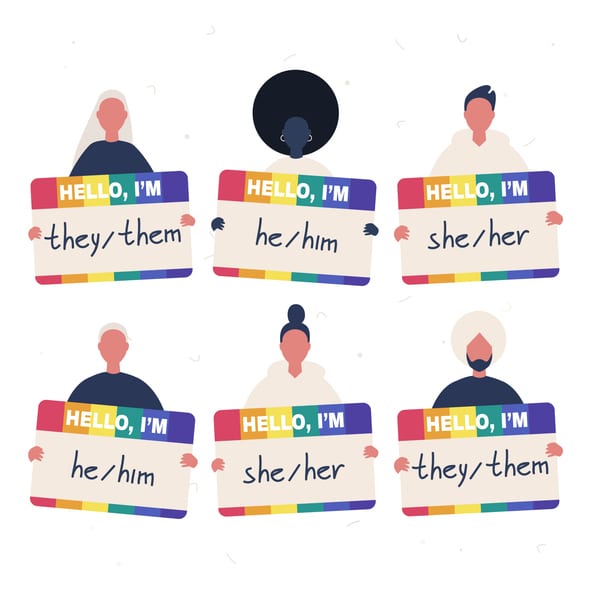
The rigid binary classifications imposed by the American government on gender and the corresponding policies targeting transgender individuals rest on an outdated and essentialist understanding of sex and identity. These policies, which legislate bodies and identities through restrictive definitions, stand in stark contrast to both contemporary gender theory and a long history of cultural recognition of gender diversity. Michel Foucault’s critique of biopolitics illuminates how institutions exercise power by regulating bodies, inscribing them with meanings that serve the interests of social control rather than reflecting any inherent truth (Lemke, 2011). Judith Butler’s (1988) concept of gender performativity further challenges the notion of a stable, biologically determined identity, revealing gender as a series of socially enacted roles rather than a fixed state of being. The governmental insistence on policies that deny the fluidity of gender and enforce rigid biological determinism ignores both the variability of human biology and the multiplicity of gendered experiences across time and cultures.
Biological Complexity and the Limits of Binary Classification
Further underscoring the flawed nature of these policies is the biological evidence that contradicts the notion of a clear-cut male-female binary. The existence of intersex conditions, such as Swyer syndrome (Michala et al., 2008) and persistent müllerian duct syndrome (Vandersteen et al., 1997), disrupts simplistic definitions of sex as strictly male or female, demonstrating that biological sex is not an immutable binary. Individuals with these conditions may possess chromosomal patterns, reproductive structures, or hormonal profiles that do not align with conventional definitions of male or female, complicating legal and medical frameworks that insist on two distinct categories (Polderman et al., 2018). Scientific understandings of genetics and endocrinology do not support the categorical distinctions that policymakers attempt to enforce, revealing a fundamental flaw in the reasoning behind restrictive laws.
Cultural Recognition of Gender Diversity
Beyond biology, historical and cultural evidence further dismantles the notion that gender variance is a modern or Western phenomenon. The hijra of South Asia, the five-gender system of the Bugis people in Sulawesi (Davies, 2007), the Diné nádleehi, the kathoey of Thailand, and the Crow baté role all illustrate traditions in which gender fluidity is embraced rather than suppressed within various cultures (Human Rights Campaign, 2020). These identities, deeply embedded in social and spiritual practices, challenge the Western colonial imposition of gender as strictly binary. By disregarding these histories and lived realities, American policies uphold a narrow and exclusionary framework that erases the complexities of human identity. The attempt to legislate gender according to rigid categories is not merely a political act but an exercise of power that seeks to discipline bodies, regulate identities, and erase the legitimacy of those who exist outside imposed norms.
The Political Justifications for Exclusion
Despite the overwhelming biological (Polderman et al., 2018), historical (Urquhart, 2019), and philosophical evidence supporting gender diversity (Ashley, 2020), supporters of restrictive policies often attempt to justify exclusion by appealing to concerns about fairness in sports and military effectiveness. These arguments, while cloaked in language of practicality, ultimately rest on the same essentialist and exclusionary framework that has long been used to police gender and marginalize those who exist outside narrow definitions. The claim that transgender athletes pose a threat to fair competition and that transgender individuals should be removed from military service exemplifies how these policies are not about preserving integrity or security but about reinforcing power structures that define whose identities are deemed legitimate.
Arguments that frame transgender individuals as a threat to athletic competition or military effectiveness rely on oversimplified and biologically deterministic assumptions about sex and gender. The claim that transgender women possess an unfair advantage in sports assumes that male and female bodies are inherently and universally distinct in ways that guarantee competitive dominance (Gender Justice, n.d). However, biological sex is far more complex than the simplistic male-versus-female dichotomy suggests. Variability exists within all populations; cisgender women themselves exhibit a range of physiological differences, with some possessing naturally high testosterone levels or other genetic traits that could confer advantages. The existence of intersex conditions underscores the complexity of biological sex, challenging the validity of rigid male-female classifications. Athletic governing bodies already accommodate biological diversity within cisgender athletes, so to single out transgender individuals as uniquely problematic is an inconsistent and politically motivated stance rather than a scientifically sound one.
Similarly, the argument for barring transgender individuals from military service is rooted in unfounded anxieties rather than evidence. Military effectiveness relies on discipline, training, and teamwork qualities that are not determined by an individual’s gender identity (Egnell, 2016; Schaefer et al., 2016). Transgender service members have served openly in multiple countries without issue, and studies commissioned by the U.S. military itself have found that their inclusion does not harm operational readiness (Schaefer et al., 2016). Exclusionist policies stem from ideological resistance rather than practical concerns, reinforcing a narrow and exclusionary definition of who is allowed to serve their country.
The Role of Psychotherapists in Advocacy
Therapists can contribute to dismantling restrictive policies by participating in advocacy efforts and supporting research that challenges essentialist assumptions about sex and gender. Therapists often witness firsthand the psychological harm caused by these policies, including the heightened risk of trauma and discrimination associated with gender identity, as well as increased risk for verbal, sexual, and physical abuse (James et al., 2016, as cited in Grosse, 2021). The harmful impact of these policies can adversely affect health outcomes and, therefore, therapists have a professional responsibility to address these harms not only through direct care but also through public and legislative advocacy.
The Responsibility of Professional Organizations
Building on this responsibility, professional organizations have a critical role to play in advocating for more inclusive and affirming gender policies at both legislative and public levels. These organizations are uniquely positioned to influence government decisions and challenge exclusionary frameworks through lobbying, policy recommendations, and public campaigns. By leveraging their credibility and collective expertise, professional bodies can push for the removal of binary classifications in medical, legal, and educational systems and advocate for the adoption of more fluid, affirming definitions of gender.
Beyond influencing lawmakers, these organizations have the capacity to shape public discourse through educational initiatives, media engagement, and public statements that challenge essentialist narratives about gender. Training programs should also reflect this commitment by equipping mental health professionals with the tools to support diverse gender identities and to engage in advocacy on behalf of marginalized communities. Public awareness efforts can further dismantle harmful stereotypes and foster greater acceptance of gender diversity, creating a cultural shift that supports legislative and institutional change. Professional organizations have the authority and platform to legitimize these conversations, ensuring that the voices and experiences of transgender and non-binary individuals are heard and reflected in policy decisions.
A Call to Action for Equity and Inclusion
Underscoring the need for policies that reflect the diversity of human biology and identity, this work promotes greater equity and inclusion for transgender and non-binary individuals. Psychotherapists, as trusted voices in both clinical and public settings, have the opportunity to influence this shift toward a more inclusive and affirming understanding of gender. By combining direct clinical support with broader advocacy, mental health professionals can help dismantle harmful policies and foster a more just and inclusive society.