
Anorexia Nervosa in Chinese Women and Adolescents


Dalemarie Johannesson, MS & Zoe Ross-Nash, PsyD
May 5, 2025
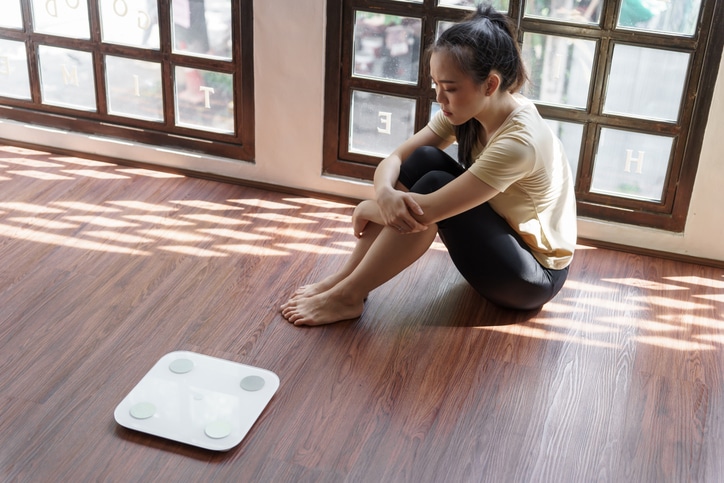
Anorexia nervosa (AN) is a chronic and debilitating mental illness characterized by an intense fear of weight gain, restriction of energy intake leading to significant weight loss that interrupts the developmental trajectory, and distorted body image (American Psychiatric Association, 2013). AN is considered the deadliest mental illness and is particularly difficult to treat due to its complex biopsychosocial foundation and ego-syntonic nature (van Hoeken & Hoek, 2020). AN is diagnosed disproportionately in White women (Stiegler & Bouchard, 2023), but is seen across cultures, sexes, and ages (Erskine et. al, 2016). Results from a 2021 study indicated a large increase in AN among Chinese women between 1990 and 2019, with a prevalence of 13.29% in 1990 and 20.27% in 2019 (Li et al., 2021). Anorexia in Chinese women can manifest and present differently than their American counterparts due to differences in culture, including cultural values and popular views about mental health (Huang et al., 2023).
Assessments for Anorexia Nervosa in Chinese Women
Tools used to evaluate eating disorders and eating disorder-related attitudes and behaviors are often created with Western ideas and values, while still being used for patients who stray from this homogeneous population (Huang et al., 2023). This practice is often done without consideration of the validity and reliability of the measurement within these different populations. In a 2023 study by Huang et al., they tested the effectiveness of the Sociocultural Attitudes Towards Appearance Questionnaire-4 Revised (SATAQ-4R), a commonly used instrument to measure body dissatisfaction related to eating disorders. Using 344 high school students ages 13 to 17, the researchers administered the two scales of the SATAQ-4R twice, a week apart. The study’s results found each of the SATAQ-4R subscales to have good internal and test-retest reliability (Huang et al., 2023). In future studies, researchers can use the SATAQ-4R to test etiological theories about eating disorders and other attitudes toward self-image in this population helping fill these gaps in current research. Future studies can also expand on the understanding of eating disorders among Chinese girls and women, as well as drive modifications and the creation of interventions specifically for this population.
Factors Impacting Chinese Women with Anorexia Nervosa
Mental Health Stigma Impacting Chinese Women with Anorexia Nervosa
The current lack of research into modifications and the creation of interventions specifically for Chinese women with AN can be attributed to some cultural considerations, including mental health stigma (Clay et al., 2020). In two separate studies, researchers compared mental health stigma surrounding AN in China and other countries to understand the presentation and prevalence rates in these cultures (Clay et al., 2020; Yan et al., 2018). Clay et al., (2020), compared mental health stigmas across nations based on their income rates. The findings indicated negative stigmas surrounding mental health in China, with its lower income per capita, when compared to European countries and other East Asian countries. The lack of resources, and those specifically dedicated to mental health, may have a negative cultural impact on attitudes toward those with mental health concerns. When reviewing the study for information on AN and other eating disorders, findings indicated poor attitudes toward eating disorder diagnoses and individuals with these diagnoses (Clay et al., 2020). With a lack of resources and a general negative stigma toward mental health, those affected by it are often ostracized by their families and communities compacting their symptoms (Yan et al. 2018).
Yan et al. (2018) compared stigmas surrounding AN in Australia and China and the ability to alter these stigmas on an individual level using the social consensus intervention. The researchers analyzed these specific cultures because of the negative beliefs surrounding food refusal and mental illness stigma in China and the converse encouragement of the use of mental health services and public attention to eating disorders and other common disorders in Australia. Researchers used the Characteristics Scale, Affective Reaction Scale, Social Distance Scale, Blameworthiness Scale, and Severity Scale to measure stigma across both groups. Their findings indicated higher levels of stigma among Chinese participants. On the individual scales, Chinese individuals who rated the severity of AN lower were less likely to endorse a willingness to interact with individuals with AN, had more negative evaluations of individuals with AN, and their reactions to individuals with AN lacked positivity when compared to their Australian counterparts. In feedback sessions with participants, Chinese participants indicated less surprise and less disappointment in the results than their Australian counterparts (Yan et al., 2018). These findings have important implications for individuals with AN in the Chinese culture. These negative stigmas can prevent individuals from seeking help. Due to the poor prognosis of AN, the consequences of these stigmas can be deadly (Fichter & Quadflieg, 2016).
Cultural Values in Chinese Women with Anorexia Nervosa
Cultural values influence the manifestation of eating disorders (Soh et al., 2007). Soh et al. examined how the value of discipline, in the form of control, influences psychological symptoms of eating disorders between Chinese Singaporean and European Australian women. These two cultures were selected as research indicates Chinese women living in Singapore follow Eastern ideals while European women living in Australia are more likely to follow Western ideals regarding discipline and control, a primary factor in restrictive eating disorders. They gave 117 participants the Multidimensional Inventory assessing domains of control, preferred means to gain control, motivation for control, and sense of control. The results were consistent with the social ideals of the two cultures. European Australian women with AN deviated more from their cultural norms than their Chinese counterparts concerning all the subscales of the inventory. Their findings support the idea that eating disorders can distort psychological perceptions of control, even in contrast to their cultural practices, with a reported greater need to maintain control for those whose culture encourages it (Soh et al., 2007).
Media and its Influence on Cultural Values and Anorexia Nervosa
Media is a vehicle for transporting cultural values and attitudes. Media representation has a strong influence on how the public perceives eating disorders and their presentation (Sun et al., 2020). Sun et al. (2020) conducted a study exploring how eating disorders are depicted in Chinese media and how these depictions influence the understanding of eating disorders among the public. A total of 292 Chinese newspaper articles spanning 21-years (1998-2019) were explored to discover inaccuracies about eating disorders due to the lack of representation that is disproportionate to the drastic increase in eating disorder prevalence in China over the past two decades. Many of these articles focused on women with anorexia and generally presented accurate information with the results concluding that the newspapers gave a shallow understanding of treatment and etiology (Li et al., 2021; Sun et al., 2020). The implications of this study stretch beyond media representation and include a need for more urgency by the Chine culture to implement preventive measures, including and beyond public attention (Sun et al., 2020).
Family Implications for Chinese Women with Anorexia Nervosa
Due to differences in cultural views and in family dynamics, researchers have analyzed how effective Western interventions are for treating this population (Ma & Lai, 2006). Family-based therapy (FBT) is currently considered the best practice for adolescents with anorexia (Crone et al., 2023). However, FBT was developed in England (Dare, 1985) and it was manualized in the United States using homogenous populations of White women with anorexia (Le Grange et al., 2002). Family dynamics and values are strongly influenced by culture, thus an intervention focused on family support has the potential to be ineffective cross-culturally. To address this possibility, Ma (2008) conducted a qualitative study using 24 Chinese adolescents with AN who received FBT in Hong Kong. They used thematized content analysis to review patients’ perspectives on how well FBT aligned with their cultural familial needs. Their results aligned with the assumptions of the effectiveness of FBT. More specifically, patients felt FBT succeeded in encouraging family self-healing abilities, decreased the effect of symptoms on family relationships, and shed light on family resources and strengths (Ma, 2008). Additionally, a study conducted by Ma and Lai (2006) examined the specific perceptions of patients on the effectiveness of FBT in terms of suffering. The results indicated patients perceived FBT had helped resolve their self-starvation, decreased distress, increased family cohesion, and reduced family conflict. These studies provide evidence that, despite cultural differences, Chinese patients with AN perceive FBT to be helpful in all of its aims (Ma, 2008; Ma & Lai, 2006).
Conclusion
AN affects individuals cross-culturally (Erskine et al., 2016) and its presentation and etiology are affected by cultural values such as mental health stigmas (Clay et al., 2020; Yan et al., 2018) and ideals surrounding control (Soh et al., 2007). Interventions used to treat AN and tools to measure symptoms, including FBT as the gold standard for treatment (Crone et al., 2023), are often developed using White homogenous populations of women and generalized for other cultures (Huang et al., 2023). It is crucial for researchers to find evidence to support the validity and reliability of these tools and interventions for other cultures. Researchers have found FBT and the SATAQ-4R to have good reliability and validity among Chinese patients with AN (Huang et al., 2003; Ma, 2006; Ma & Lai, 2008). These findings allow patients to be treated with these tools and interventions. The implications further allow for more thorough future research and care for these patients as anorexia nervosa rates increase in China (Li et al., 2021).