
A Synopsis of Treatments for Black Women Following Intimate Partner Violence


Kaitlin Forestieri, PsyD & Amy E. Ellis, Ph.D.
June 1, 2022
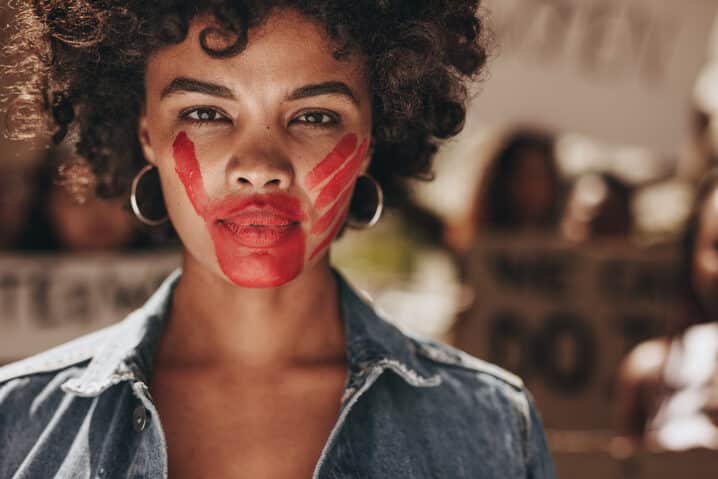
The purpose of this paper is to assist non-Black therapists address critical issues when treating Black women who have experienced intimate partner violence (IPV). This paper was written from a place of cultural humility in an effort to educate on how to provide culturally relevant treatment, rather than an attempt to speak for Black women. Further, this paper attempts to reduce the burden on members of the Black community that are simultaneously advocating for themselves while experiencing shared trauma.
IPV encompasses rape, physical violence, and/or stalking by an intimate partner and affects 42.4 million women in the U.S. (Stockman et al., 2015). Almost 44% of Black women (BW), compared to 35% of White women (WW) self-report as survivors of IPV (Stockman et al., 2015). In general, survivors of IPV experience increased rates of depression, posttraumatic stress disorder (PTSD), and suicidality as compared to those who have not experienced IPV. Marital rape and other forms of sexual assault against BW are also associated with depression (Campbell & Soeken, 1999), as well as posttraumatic stress and stress in general (Temple et al, 2007). Unfortunately, the research is limited in regards to comparisons among different racial groups as most studies use predominantly White samples, making generalizations to marginalized racial groups difficult (Kelly et al., 2020). Furthermore, research that does include BW participants tends to engage in “ethnic lumping,” making differences among African, Black American, Caribbean, etc. Survivors difficult to discern (West, 2021). However, some findings note that BW as compared to WW report higher rates of nonfatal strangulation (Messing et al., 2018), reproductive coercion (Basile et al., 2021), and domestic homicide (Kivisto et al., 2021).
Despite these disparate risks, BW are less likely than their White counterparts to seek mental health treatment for IPV (Flicker et al., 2011; Johnson & Zlotnick, 2007; Satyen et al., 2019), with only 7.7% of BW compared to 13.5% of WW seeking treatment (Cheng & Lo, 2015). Although seeking treatment for IPV is low across races, due to the intersectionality of social inequality in the U.S., BW are also more likely to be homeless, of lower socioeconomic status, substance using, or incarcerated, which further compounds their likelihood of developing PTSD and related symptoms (Rice et al., 2020). Indeed, systems of oppression around race, ethnicity, and gender disproportionately place women and women of color at higher risk of being physically assaulted (Ford, 2012).
Mental Health & Coping
Benítez et al. (2014) found that Black Americans have high rates of chronicity of PTSD, with only 6 out of 67 individuals diagnosed with PTSD recovering during their study. Black Americans with PTSD showed significantly lower psychosocial functioning than those with anxiety diagnoses. For example, adaptive strategies including exercise, deep breathing, and acceptance were rarely endorsed, while comparatively maladaptive strategies such as substance use were endorsed (Sullivan et al., 2018). Substance use may be a maladaptive coping strategy as indicated by Sullivan et al. (2018), or it may be that substance use is a risk factor for IPV (Nowotny & Graves, 2013).
PTSD is correlated with suicidality (Cox et al., 2016). Up to 80% of women who attempt suicide attribute this to an abusive partner and are more likely than women who have not experienced IPV to make numerous attempts (Davis et al., 2009). Indeed, experiencing IPV more than doubles BW’s risk of attempting suicide (Davis et al., 2009).
Women who experience extreme danger in their intimate relationships often become depressed (Lucea et al., 2012). Houry et al. (2005) found that BW who were impoverished, experienced IPV, or had attempted suicide had higher levels of depressive symptoms than non-attempters. In addition, suicide attempters tended to use coping strategies that accommodated the destructive environment (i.e., the abusive environment) by means of substance use which may numb the reality of their painful situation (Reviere et al., 2007). Interestingly, they also showed slightly higher use of positive coping via therapy and a focus on their children (Reviere et al., 2007). Both suicidal survivors and non-suicidal survivors of IPV reported coping with the use of religion and community resources (Reviere et al., 2007).
According to Fleming and Resick (2016), women of color may be predisposed to dissociative symptoms before IPV due to the cumulative impacts of racism, sexism, and trauma exposure. Additionally, compared with depression, anxiety, and intrusive experiences, dissociation was the most predicted mental health outcome following IPV (Mills et al., 2018). Disordered eating is another common posttraumatic symptom for BW and may be viewed by BW women as a way to regain autonomy over their own bodies, despite violation by their partner (Harrington et al., 2010). BW who reported IPV experienced significantly higher risk for disordered eating than non-abused women, especially those with physical or sexual abuse (Lucea et al., 2012). Further, women with depressive symptoms and PTSD were at an even higher risk for developing disordered eating (Lucea et al., 2012). Binge eating in particular may be used as a coping tool that is deemed culturally acceptable in responding to and coping with trauma (Harrington et al., 2010).
Barriers to Treatment
Black Americans are “one of the most vulnerable, underserved populations in the mental health system,” (Briggs et al., 2011, p. 4). In general, there is a lack of utilization of mental health services by Black adults: 57% compared to 70% for White Americans (Rostain et al., 2015). BW are less likely to seek help following IPV than WW (Sabri et al., 2013). Psychology in the U.S. has been complicit in the mistreatment and neglect of Black Americans throughout the years. Cultural mistrust (i.e., distrust of White Americans resulting from historical racism and oppression of people of color; Terrell & Terrell, 1981) of psychology has resulted (Ward et al., 2009). In addition, BW are of a double minority status—race and gender—that impacts their access to services (Ward et al., 2009). Further, BW may be less likely to seek out psychological treatment due to affordability. In the U.S., 27% of Black Americans live below the poverty line compared to only 10% of White Americans (Rostain et al., 2015). A similar disparity is found in the rates of insurance, where almost twice as many Black Americans (19%) are uninsured compared to White Americans (11%; Rostain et al., 2015). Despite rising insurance coverage rates, as of a 2019 report, the uninsured rates among Black and Latinx/Hispanic adults were still significantly higher than that of White adults (Baumgartner et al., 2021). Regarding IPV specifically, economic dependence on the abusive partner is frequently cited as one of the most significant barriers to leaving or seeking help (Hien & Ruglass, 2009). Interestingly, there is no general consensus on whether there are racial disparities in disclosing IPV. For example, Temple et al. (2007) did not find a difference between WW and BW in regards to number of reported sexual assaults by a partner. However, Ramisetty-Mikler et al. (2007) found that Black couples report two times as much sexual aggression compared to White couples, suggesting that there is an underreporting issue at play.
Community mental health facilities often become the only option for Black Americans (Briggs et al., 2011). While this is better than no access to treatment at all, resulting treatment differences between Black and White Americans cannot be ignored. Community mental health facilities sometimes lack the financial resources, political support, and knowledge in providing culturally competent care for racial minorities (Briggs et al., 2011; Rostain et al., 2015).
Especially for Black Americans living in rural communities, transportation issues may affect treatment-seeking (Kawaii-Bogue et al., 2017). BW who experience IPV may also have the added barrier of finding childcare during their sessions, as they often cannot ask their partner(s) to watch their children and may not feel comfortable asking family or friends due to privacy concerns (Kawaii-Bogue et al., 2017). Further, the authors report that childcare adds to the cost of treatment, again making the barriers BW face cumulative.
When Black Americans engage in treatment, they also have higher rates of attrition (Sprang et al., 2013) than other races (Lester et al., 2010), perhaps due to clinician bias. Black clients who receive treatment from clinicians with higher levels of implicit bias (i.e., unconscious stereotyping) reported more negative treatment experiences than White clients (Kawaii-Bogue et al., 2017), even when the implicit bias was positive (Davis et al., 2009). Further, White clinicians tend to over-pathologize or misdiagnosis Black clients due to cultural differences in symptom presentation (Kawaii-Bogue et al., 2017).
Only 5% of mental health clinicians are Black, despite 12% of the population identifying as Black (Rostain et al., 2015). Some ethnic minority mental health scholars have argued that this impedes the therapeutic relationship because the clinician may be unable, or perceived as unable, to understand cultural differences (Kawaii-Bogue et al., 2017). Feeling unrepresented may add to Black Americans’ cultural mistrust of mental health.
Integrative Care for BW Survivors of IPV
BW may feel more comfortable disclosing their experiences of IPV and other issues with family and friends rather than healthcare providers. Implementing family psychoeducation and family therapy may improve treatment effectiveness and adherence (Kawaii-Bogue et al., 2017). Further, community resources, especially churches, are often first stops for Black Americans seeking help and clinicians should bridge such alliances and might make themselves more visible to the Black community (Briggs et al., 2011; Kawaii-Bogue et al., 2017).
It is recommended that clinicians operate from a holistic framework, in which clients can have physical and mental health needs met in the same location (Kawaii-Bogue et al., 2017; Weist et al., 2014). This reduces stigma by creating ambiguity around reasons for consulting, allowing for greater levels of privacy which are especially critical to a survivor of IPV.
Treatment Approaches
Motivational Interviewing
Motivational interviewing (MI; Miller & Rollnick, 2013) is an evidenced-based collaborative, person-centered practice of eliciting and strengthening motivation for change. While less than a handful of studies have explored the use of MI with survivors of IPV, theoretical, anecdotal, and practical arguments have been made for its use (Wahab et al., 2014). Consistent with trauma-informed treatment, MI focuses on strengths and self-efficacy, while emphasizing collaboration, empowerment, and respect for choices. MI with survivors of IPV focuses on changes that survivors can control (e.g., self-care, safety planning, social support). Wahab et al. (2014) found that MI significantly reduced rates of depression by building self-efficacy and a sense of accomplishment in BW who experience IPV. Of note, researchers are beginning to examine the efficacy of peer-provided MI (Tsai et al., 2017) which may be especially effective with BW given higher rated comfort with family and friends.
The Grady Nia Project
The Grady Nia Project (Nia; a Kwanzaa term meaning “purpose”) is a culturally-informed treatment for BW who have experienced IPV. Nia incorporates Africentric Theory which empowers BW through cultural history and knowledge (Corneille et al., 2005). Clinicians must consider that IPV survivors likely already feel disempowered because of their abuse, and that this may be especially true if they are also Black. Wright et al. (2010) found that empowerment mediated the relationship between race and PTSD in BW who experienced IPV. Womanism, the culturally relevant feminist theory that addresses the intersection between race and gender, is also incorporated (Davis et al., 2009).
Nia is housed within Grady Health System, which is a large, public, urban hospital in Atlanta, Georgia. Nia consists of 10 manualized group sessions for 90-minutes each co-led by one Black and one non-Black therapist in an outpatient setting (Davis et al., 2009). Women are assigned homework reinforcing session content, and are also supplied with tip cards which summarize key take-home points (Davis et al., 2009). Participants are not required to leave their partners, but rather, are taught strategies for removing themselves from abusive relationships, in the hope that this will lead to more violence-free lives (Kaslow et al., 2010). A number of adjunctive services are also incorporated. Nia has been effective in reducing suicidality and depressive symptoms, but not PTSD symptoms (Davis et al., 2009; Kaslow et al., 2010).
The Interconnections Project
The Interconnections Project (TIP) intervention is an academic-community partnership between two universities and a domestic violence center for BW (Nicolaidis et al., 2013). TIP utilizes the Chronic Care Model (CCM) which aims to place the Black community and its resources at the core of the program to address depression. Unlike Nia, TIP was not intended to invent new depression care therapies; rather, it aimed to create an environment that empowered and supported Black IPV survivors to take best utilize existing depression treatment strategies. Services frequently included the use of MI. Participants were welcome to utilize other services (e.g., support groups), but due to unforeseen events, services at the center were variably available (Nicolaidis et al., 2013). Initially, TIP facilitated a series of nine interactive workshops based on Cognitive Behavioral Therapy (CBT) approaches to managing depression. However, due to low attendance at group sessions, group sessions were discontinued. For the remaining participants, CBT-based materials were integrated into the individual MI sessions. Significant improvements in depression severity, self-efficacy, self-management behaviors, and self-esteem were found.
Discussion
The disproportionate number of barriers that face BW in receiving adequate mental health care is undeniable. With such a large percentage of BW experiencing IPV (43.7%), and the severity of resulting symptoms, these barriers must be broken down. Research currently suggests that methods to achieving this include, but are certainly not limited to: reducing clinician bias (Kawaii-Bogue et al., 2017), training more Black clinicians (Rostain et al., 2015), offering culturally-informed integrative frameworks (Kawaii-Bogue et al., 2017; Weist et al., 2014), and pro-bono or sliding scale services (Briggs et al., 2011; Rostain et al., 2015).
While there is research to suggest that there are treatments for women survivors of IPV, few are specific to BW (Iverson et al., 2011) or are not specific to intimate partner violence (Williams et al., 2014). Researchers have begun investigating treatments for BW who have experienced IPV, informed by research on the barriers to treatment, in an attempt to increase utilization rates and decrease treatment attrition. Preliminary evidence from these pilot studies indicates that addressing these barriers improves treatment outcomes and reduces attrition (Davis et al., 2009; Kaslow et al., 2010; Nicolaidis et al., 2013; Wahab et al., 2014). While this is certainly a step in the right direction, there is still much more work to be done. For instance, while the aforementioned studies have shown promise in decreasing depression and suicidality among BW survivors of IPV, only one study targeted PTSD symptoms (Dutton et al., 2013) – despite PTSD being potentially chronic among Black Americans (Benítez et al., 2014). Therefore, future research should focus on culturally informed approaches to treating PTSD symptoms specifically, in addition to the other symptom sequelae that results from IPV. The impetus remains on clinicians and researchers to pursue further data collection to continue improving treatment effectiveness, as would be the expectation with any other population. Additionally, research that has been conducted at specific sites (e.g., Nia) should be implemented in other areas throughout the U.S., to not only demonstrate generalizability, but also to provide more BW with treatments that are specifically designed to be effective for Black survivors of IPV.