
A Meeting of Brains: Inter-Brain Synchrony and Plasticity in the Clinic

Haran Sened, PhD & Simone Shamay-Tsoory, PhD
September 8, 2025
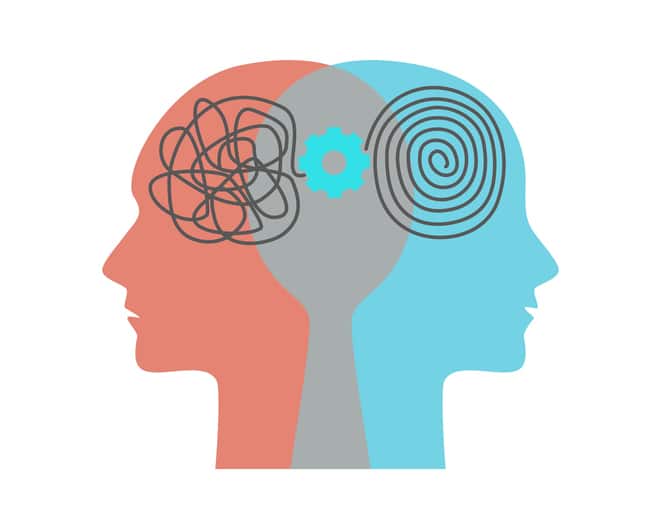
The in-session relationship between therapists and clients has been widely recognized as an essential component of the therapeutic meeting (Baier et al., 2020). One of the key relationship-building mechanisms used across interpersonal interactions is synchrony, or the tendency to coordinate their verbal and non-verbal behaviours. There are a variety of types of behavioural synchrony that have been associated with better treatment outcomes (Wiltshire et al., 2020). In recent years, new technologies for brain imagery as well as innovations in research design have allowed psychotherapy researchers to explore a new type of synchrony named inter-brain synchrony.
Inter-Brain Synchrony Outside of the Clinic
When two people interact, their behavior reflects their brain activity. For example, if one person is feeling happy, they may smile or say something uplifting; the other person’s perception of this behavior (i.e., seeing their smile or hearing their uplifting words) also results in brain activity. Thus, individual brain activity for each person is coordinated, or synchronized, with the brain activity of the person in the interaction (Hasson et al., 2012). Just like dancers whose synchronization with their partners allows them to intuit their next moves, inter-brain synchrony is associated with improved interpersonal dynamics, including closeness (Dikker et al., 2021; Kinreich et al., 2017) and cooperation (Czeszumski et al., 2022), as well as improved performances on joint tasks, such as learning (Pan et al., 2018; Shamay-Tsoory et al., 2025), drawing (Xie et al., 2020), and problem-solving (Lu et al., 2019). This association is bidirectional – when people are asked to cooperate with one another, their inter-brain synchrony increases (Hu et al., 2018). Such methods that directly increase brain synchrony leading to better interpersonal outcomes include movements and speech rhythms (Deng et al., 2024a; Kawasaki et al., 2013; Nozawa et al., 2019), joint mindfulness exercises (Deng et al., 2023; Deng et al., 2024b), and direct dual-brain stimulation (Pan et al., 2020).
What do this mean for individuals who are managing mental health challenges? Many clinical diagnoses and conditions are associated with interpersonal difficulties (Girard et al., 2017). As may be expected, many of these diagnoses and conditions are also associated with deficits in inter-brain synchrony, including borderline personality disorder (Bilek et al., 2017), depressive disorders (D. Zhang et al., 2020), and in prodromal psychosis risk (Wei et al., 2023). Thus, difficulties with synchronizing brain activity might be part of the problem in many such situations.
Inter-Brain Plasticity: A Potential for Lasting Interpersonal Change
Is there a way to help people who are struggling with interpersonal difficulties to change these inter-brain dynamics? One of the main mechanisms of neurological change, termed brain plasticity, is called spike-timing-dependent plasticity (Caporale & Dan, 2008). It essentially means that when two parts of the brain are activated in close succession, the connection between them will grow stronger over time. As a simplified example, a person who is learning French might start with a weak connection between brain regions activated by the notion of “Yes” in their native language and brain regions activated by the sound “Oui.” However, in going over class materials and through increased exposure, activation of the sound “Oui” will automatically activate the semantic notion of “Yes”, allowing the person to understand conversations in French better and faster.
Inter-brain plasticity theory (Shamay-Tsoory, 2021) and its specific application to therapy (Sened et al., 2022) suggests that the same process can increase synchrony between the brains of two people. For example, a client who has been exposed to abusive relationships since childhood might be unsure whether people smiling at them is an expression of genuine interest and affection or is in preparation to manipulate them. Thus, their therapist’s feelings of warmth toward them reflected in a smile might not, at first, lead to any specific brain activity as they remain wary of the meaning of this gesture. However, over time, the therapist’s ability to maintain a stable relationship with the client and to demonstrate their understanding and care can lead to the therapist’s smile being consistently associated with genuine warmth in the client’s brain. Through brain plasticity this connection can become more automatic, allowing the client to enjoy their relationship with the therapist more as they better understand the therapist’s gestures. It also allows them to interpret a wide array of verbal and non-verbal expressions by the therapist. Eventually, this experience may be generalized to communications with other people in the client’s life, improving the overall quality of their interpersonal relationships. Thus, inter-brain plasticity theory suggests that therapy should improve clients’ capacity for inter-brain synchrony with their therapists and with others in their lives.
Inter-Brain Synchrony and Plasticity in the Clinic
The theoretical concept of inter-brain synchrony and plasticity in the clinic, though relatively novel, has been studied more closely in recent years. Single session studies in which participants were assigned to a single session with a therapist (as opposed to simply making small talk) had increased inter-brain synchrony (Zhang et al., 2018). The same study linked inter-brain synchrony with the quality of the working alliance between therapists and clients. Interestingly, another study with a similar procedure has shown that more experienced therapists are able to initiate stronger brain synchrony with their clients, indicating inter-brain plasticity on the therapist side as well (Y. Zhang et al., 2020).
As for long-term effects among people previously diagnosed with borderline personality disorder, people in remission have higher inter-brain synchrony in interactions than people with an active diagnosis (Bilek et al., 2017), suggesting that changes in their clinical conditions have led to changes in their capacity for inter-brain synchrony. These authors and colleagues examined inter-brain synchrony in a small sample of clients experiencing test anxiety who underwent a six-session treatment program (Sened et al., 2025). Participants’ capacity for inter-brain synchrony increased over the course of treatment, an increase which was mirrored by their symptom reduction. These researchers have recently concluded data collection on what is the largest study of inter-brain synchrony in psychotherapy, funded by a Norine Johnson grant from the Society for the Advancement of Psychotherapy. We examined 21 clients undergoing 16 sessions of supportive-expressive psychotherapy for major depressive disorder while performing brain imaging every other session. Our preliminary results suggest that inter-brain synchrony improves alongside symptom reduction, suggesting that inter-brain plasticity is at play. Preliminary evidence suggests associations between inter-brain synchrony and interpersonal variables, such as working alliance and therapist empathy.
Takeaways and Future Directions
While in-session behavioral synchrony has been studied for quite some time (Koole et al., 2020), recent research highlights the role of inter-brain synchrony in therapy, with initial studies linking it to therapeutic outcomes. Importantly, this line of research demonstrates that existing forms of therapy are already engaging inter-brain plasticity and improving clients’ capacity for inter-brain synchrony. However, when taking into account non-clinical findings, we would expect joint creative exercises, such as those used in art therapy and similar methods, as well as joint experiential exercises (e.g., joint imagery or mindfulness practices), to facilitate in-session synchrony.
As this field of study progresses, we expect new findings to highlight the role of specific neuro-social mechanisms in therapeutic processes and to examine the effects of biological processes, such as sleep on the effectiveness of therapy sessions, resulting in new avenues for improving psychotherapeutic treatments.