
60 (4) Fall Presidential Column
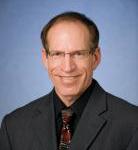
Stewart E. Cooper, Ph.D., ABPP
October 4, 2025

Recently, the twenty-year anniversary of Hurricane Katrina was honored with documentaries reviewing its causes as well as efforts at healing from its injuries, physical and personal. The devastation of Katrina resulted from a complex interplay of natural as well as human and structural factors. Today, we are facing a new type of hurricane, perhaps a never experienced before level 6 or 7 one, caused by rapidly accelerating changes and intensifying uncertainty, and fueled by a complex interaction of technological disruption, global interconnectedness, shifting workforce expectations, and US and International geo-political pressures. Psychotherapy practice, education, supervision, research, and administration are being impacted by this hurricane of unprecedented very rapid change — and all of us, as SAP members and leaders, alongside our clients, students, supervisees, and research participants, will need to collaborate together to both mitigate the destructive aspects as well as to optimize the opportunities.
This is the final of my four Presidential Columns it is my privilege to write this year, each being the lead article in every issue of the Psychotherapy Bulletin and also as the featured article on the SAP Website Homepage. My hope is the structure I have employed has helped you in becoming aware of the myriad activities SAP leaders and volunteers are doing for you as well as the opportunities they are making available to you and that you are excited about both these directions and opportunities. My wish is that you have reached out to SAP leaders to get involved or to express needs or that you do so this Fall.
My first Presidential Initiative focuses on furthering our focus on the salience and incorporation of identity and culture in the science, practice, and education of psychotherapy and psychotherapy supervision. Details on how the various domain/committee areas of SAP have been working in that were shared in my first Presidential Column linked here.
My second Presidential Initiative focuses global cross-fertilization of psychotherapy research, education, practice, and application. The contributions of the various SAP domain/committee members to this important area were outlined in my second Presidential Column which can be accessed here.
My third Presidential Initiative focuses on increasing the value and engagement of SAP membership across the professional lifespan. The third Presidential Column linked here provides information on how the various areas of SAP functioning are working on this critically important priority.
My fourth and final Presidential Initiative focuses on having SAP function as the authoritative voice in advancing psychotherapy science, practice, education, and application. The remainder of this column will feature what each of our seven Domains (in their alphabetic order) plus our Publications Board have done, are doing, or plan to do as aligned with this fourth priority. At the end of the column, I will opine some comments about my hopes for SAP for the future as tied into the times of unparalleled change that are manifesting in so many ways and areas.
Diversity Domain
Domain Representatives: Changming Duan, PhD, and Susan Woodhouse, PhD
Committee Chair: Wonjin Sim, PhD
Coordinator of the Advocacy and Mentoring Program for Diversity (AMPD) program: Rosemary Phelps, PhD
- Diversity Domain has been active engaging members and conducting activities in line with President’s initiatives for 2025. Specifically, a number of activities have been initiated and pursued, and they have yielded some positive outcomes. Among them:
- AMPD program is healthy and going well! The 2023-2025 cohorts of scholars (2) have just graduated with a presentation at APA convention. The recruitment of the next cohort of scholars will start soon.
- A new diversity committee has been recently formed with 5 members. The committee has met twice and developed six programs with persons in charge identified.
- We have initiated and implemented a collaborative program with International Domain – we presented at Society for Psychotherapy Research 2025 and submitted to PB subsequently.
- Diversity Research Grants applications were reviewed by the adhoc committee, committee chair, and domain representatives and two recipients (Yu Tian and Cameron Andrews) were selected. The grant award was presented to Cameron Andrews was presented in person at APA 2025 in Denver.
Early Career Psychology (ECP) Domain
Domain Representative: Yujia Lei, PhD
Committee Chair: Peter Franz, PhD
- The ECP committee is currently focused on expanding training opportunities to improve clinical practice in two key areas. First, we are planning a webinar focused on improving clinicians’ abilities to enhance engagement, commitment, and alliance with therapy clients. This webinar will feature Jordan Harris, PhD, who has developed a deliberate practice training program he will share with our attendees. Second, we are planning a webinar focused on technological innovations that can enhance clinical assessment and intervention efforts, especially for high-risk clients. This webinar will feature Matthew Nock, PhD, who codirects Harvard University’s Center for Suicide Research and Prevention.
Education and Training Domain
Domain Representative: Erica Marshall-Lee, PhD
Committee Chair: Melissa Jones, PhD
The Education and Training Domain is working on several projects:
- We are actively identifying strategies to increase webinar and CE offerings and attendance.
- We will discuss offering a webinar focused on the ethics, benefits, and utilization of AI as a therapeutic intervention in session and as an aid to the therapeutic process between sessions.
International Domain
Domain Representative: Xu Li, PhD
Committee Chairs: Changming Duan, PhD & Dana Tzur-Bitan, PhD
Positioning SAP as the Authoritative Voice in Psychotherapy Science, Practice, Education, and Application
1. Overview
In alignment with the presidential initiative, the International Committee has focused on strengthening SAP’s global presence, fostering international research collaboration, and promoting culturally informed psychotherapy. Through scholarly dissemination, strategic partnerships, and inclusive membership initiatives, the committee has contributed to SAP’s leadership as a global authority in psychotherapy.
2. Major activities and outcomes
2.1 Advancing international scholarship
- Quarterly meetings have sustained ongoing planning and collaboration across regions.
- Five Bulletin articles were published by committee members in 2025, sharing global perspectives on psychotherapy.
- At SPR 2025 (Krakow), the committee organized five symposia and a social hour, highlighting SAP’s international leadership.
- The special issue of Practice Innovations on International Perspectives on Psychotherapy (edited by Rod Goodyear & Dana Tzur-Bitan) is nearing completion, expanding SAP’s influence on global practice.
2.2 Building global research capacity
- Coordinated the Division’s International Research Grant review process for students and early career professionals.
- Continued an ongoing multi-country research project involving seven countries/regions.
- Launched a collaborative project examining the role of social location in psychotherapy, advancing equity-focused research.
2.3 Strengthening partnerships and membership
- Continued collaboration with Oriental Insight (China), resulting in steady membership growth and strong engagement.
- Implemented the International Membership Grant, supporting outreach to underrepresented regions.
- Partnered with the Diversity Domain for a joint program at SPR and a subsequent Psychotherapy Bulletin submission.
3. Key results
- Global visibility: SAP maintains a strong and growing presence at international conferences such as SPR.
- Enhanced scholarly engagement: Bulletin submissions have increased, reflecting successful outreach strategies.
- Collaborative community: Our 17-member committee has become a productive, globally connected network.
- Expanding reach: Membership in China continues to grow, supported by active engagement and dissemination efforts.
4. Summary
- Through research, outreach, and collaboration, the International Committee has advanced SAP’s role as a globally engaged and authoritative voice in psychotherapy. Our work continues to strengthen SAP’s impact across science, practice, education, and application worldwide.
Membership Domain
Domain Representative: Jairo Fuertes, PhD
Committee Chair: Firouz Ardalan, PhD
- One of our primary goals is to strengthen and cultivate deeper engagement among our membership, while ensuring that our work remains integrated, collaborative, and mutually reinforcing throughout the division. Furthermore, we are continuing to design and build better ways to maintain and engage new members of the division. We aim to create a more cohesive structure and process that maximizes the collective strengths of our membership to help advance the overall mission of Division 29.
- Equally central to our vision is ensuring that our membership is aware, engaged, and active in the society’s many offerings. This emerging generation represents the future of the Society for the Advancement of Psychotherapy. By both attracting new members and engaging current members, we will ensure a robust community and spread the powerful voice of Division 29. Our members’ involvement is essential in shaping the identity, values, and culture that Division 29 aspires to embody, which strongly promotes advancing psychotherapy science, practice, and education. We are committed to building pathways for mentorship, professional development, and meaningful participation so that students, early-career psychologists, practitioners, researchers, policymakers, and others feel welcomed, supported, and empowered to contribute to the Division’s long-term vitality and mission.
Professional Practice Domain
Domain Representative: Amy Ellis, PhD
Committee Chair: Marcy Rowland, PhD
- We are pleased to announce that we have an upcoming webinar in which we will be offering two free continuing education credits, titled, “Pathways to Specialization: Lessons from Experts in Creating Thriving Niche Practices” which will take place on December 12, 2025 at 2:00pm EST. Register here: https://us06web.zoom.us/webinar/register/WN_bkJcsq5bSbm0ShuzhSgTsg. More about the webinar: This continuing education symposium brings together five seasoned mental health professionals from diverse disciplines, including social work, counseling psychology, clinical psychology, professional counseling, and marriage and family therapy—to share their journeys in developing successful niche practices. Panelists will discuss their unique pathways to building practices and provide insight into how specialized practice areas can enhance client care, strengthen referral networks, and create a sustainable business model. Topics will include developing expertise in working with unique populations (e.g., clients in rural settings, couples and families, trauma survivors, adolescents, autism evaluations) and navigating the practical and ethical considerations of niche marketing. Panelists will highlight common challenges associated with balancing business demands and offer concrete strategies and lessons learned to help them identify their own niche areas, market effectively, and design practices that align with their professional values and goals.
- We’re launching a broad initiative to better understand member perspectives on the evolving issue of master’s-level psychology training and accreditation. We’re inviting Division 29 members with any relevant experience or insight (whether through clinical work, supervision, training, or policy engagement) to complete a brief survey. Your responses will contribute to a qualitative synthesis of perspectives from across the Division, with the goal of informing dialogue, education, and policy considerations around this complex and timely topic. The survey includes a few open-ended questions and takes approximately 10–15 minutes to complete. If you’re interested in further involvement, there’s also a question at the end about potential authorship or contribution to a future Bulletin article: https://novapsy.sjc1.qualtrics.com/jfe/form/SV_033j2bLX3PuW6XQ
Public Interest and Social Justice
Domain Representative: Andreas Perez-Rojas, PhD
Social Justice Committee Chair: Linda Campbell, PhD
The Public Interest and Social Justice Domain is actively advancing several key projects that position SAP as an authoritative voice in psychotherapy on many fronts:
1. Measure of Structurally Competent Case Conceptualization
- Advances science and practice by developing a validated tool to assess therapists’ integration of social determinants of health into case conceptualization.
- Strengthens education and application by providing a standard for training and supervision.
- Positions SAP as a leader in defining structurally competent psychotherapy.
2. Culture & Context-Specific Psychotherapy Factors (with Diversity Domain)
- Expands scientific knowledge on psychotherapy for marginalized clients.
- Informs education and training to better prepare therapists for real-world diversity.
- Establishes SAP’s voice in embedding cultural and contextual awareness into psychotherapy.
3. Pilot Study: Challenges Faced by Asian Students (with Diversity Committee)
- Contributes new research evidence on an underserved student group.
- Guides practice and resource development for equitable student support.
- Serves as a model for expanding research to other identity groups, reinforcing SAP’s leadership.
4. Webinar Series on Structural Competency
- Advances education through accessible, practice-oriented learning opportunities.
- Bridges science and application by translating research into clinical skills.
- Positions SAP as the go-to source for training in structural and contextual psychotherapy.
Science Domain
Domain Representative: Patricia Spangler, PhD
Committee Chair: Harold Chui, PhD
- Science and Scholarship continues to encourage psychotherapy scientists from across the world to apply for our grants. Proposals for the Charles J. Gelso, PhD., Psychotherapy Research Grant and the Norine Johnson, PhD., Psychotherapy Research Grant for Early Career Psychologists were announced in the Psychotherapy Bulletin in February, were received on May 1, 2025. The grants committee was pleased that both the Gelso and Johnson grants received multiple applicants, several of them from outside the United States. The 6 Gelso and 5 Johnson grant applications were highly competitive with quality research proposals coming from across the United States from 4 international applicants. The committee chair was able to recruit 4 reviewers from among SAP member to rate the applications. The committee chair and domain representative were pleased that our goal of encouraging international applicants was met for both the Gelso and Johnson grants.
- The domain representative, Patricia Spangler, and committee chair, Harold Chui, continue to work with grant recipients on grant administration issues, which have typically involved processing requests for extensions due to unforeseen issues.
In addition to our above Domains, our Bulletin and Psychotherapy publications continue to have a focus on this third initiative.
- As always, please check out our fantastic articles, related to Dr. Cooper’s presidential themes, located on our website:
- And through our journal with a recent special issue on big needle jumps in psychotherapy research:
- Constantino, M. J., Coyne, A. E., & Boswell, J. F. (2025). Big needle jumps in psychotherapy research. Psychotherapy, 62(3), 263–266. https://doi.org/10.1037/pst0000582
- Goldberg, S. B., Tanana, M., Stewart, S. H., Williams, C. Y., Soma, C. S., Atkins, D. C., Imel, Z. E., & Owen, J. (2025). Automating the assessment of multicultural orientation through machine learning and natural language processing. Psychotherapy, 62(3), 292–300. https://doi.org/10.1037/pst0000519
- Aafjes-van Doorn, K., Cicconet, M., Bate, J., Cohn, J. F., & Aafjes, M. (2025). Development of an artificial intelligence-based measure of therapists’ skills: A multimodal proof of concept. Psychotherapy, 62(3), 301–314. https://doi.org/10.1037/pst0000561
FINAL COMMENTS
We are living in a time of unparalleled change. Such times can involve a high level of stress and anxiety but they also offer tremendous opportunities (Guan, Wang, Zhang, & Cao, 2023). As computing power, AI, biotech, renewable energy, and communications show exponential growth patterns (Moore’s Law–style trends), technological developments build on each other, so breakthroughs come faster. Because of global connectivity and social media, cultural shifts (e.g., attitudes toward work, gender roles, climate change) diffuse across societies far more quickly than in past centuries. Scientists note that climate impacts—extreme weather, melting ice, biodiversity loss—are not linear but accelerating due to feedback loops. The need for psychotherapy as a support and a facilitator could not be greater. Helpful Mindsets for Leading Accelerated Change (see Ravitch & Herzog, 2023) need to be encouraged. These include: 1) Adaptability & Flexibility – Willingness to pivot quickly, experiment, and learn from failure; 2) Growth Orientation – Seeing disruption as an opportunity for innovation, not just a threat. 3) Systems Thinking – Understanding how changes in one area ripple through others; 4) Empathy & Human-Centeredness – Recognizing that people experience change at different paces and with different anxieties; 5) Resilience – The ability to absorb shocks, recover, and model steadiness for others; and 6) Ethical Foresight – Asking not just can we change, but should we—a crucial stance in tech-driven acceleration.
I feel deeply grateful for the opportunity to serve as Division 29 President and am excited and optimistic that all of what needs to be accomplished in the remaining months of 2025 will be successful. I am also deeply appreciative for all the talented and dedicated leaders in the Society who volunteer their time and efforts to advance psychotherapy science, practice, education, supervision, and administration, and for the many, many SAP members who do likewise. A new opportunity created this spring is to participate in Presidential Town Halls. These Presidential Town Halls will focus on different populations within the Division. Please be on the lookout for these Town Halls.
I want to end my final Presidential Column with encouragement for each of you to utilize all the knowledge and tools that the Society is providing through its Website, Psychotherapy Journal, Psychotherapy Bulletin, the listserv, and Various Social Media outlets as well as opportunities for involvement on its various committees. I also encourage you to contribute to each of these outlets. Opportunities for leadership are available. If you are not sure how you would like to contribute but would value a conversation, please reach out to me.
Stewart Cooper, PhD, ABPP
SAP President